Disaster Management
VisionIAS VAM 2026 Environment & Disaster Management: Simplified Preparation for Dynamic GS Paper-III Themes




The UPSC Civil Services Mains Examination demands much more than factual knowledge. It tests an aspirant’s ability to understand interlinked issues, analyse policy choices, apply current developments, and present balanced solutions within a limited word count. This is especially true for Environment and Disaster Management, one of the most dynamic and high-utility areas of GS Paper-III.
Environment and Disaster Management questions often require aspirants to connect ecological concepts with governance, climate change with equity, biodiversity with livelihoods, pollution with health, and disasters with preparedness, mitigation and resilience. In recent years, UPSC has increasingly tested not just “what” an issue is, but “why” it matters, “how” it affects society and development, and “what” institutional or policy response is required.
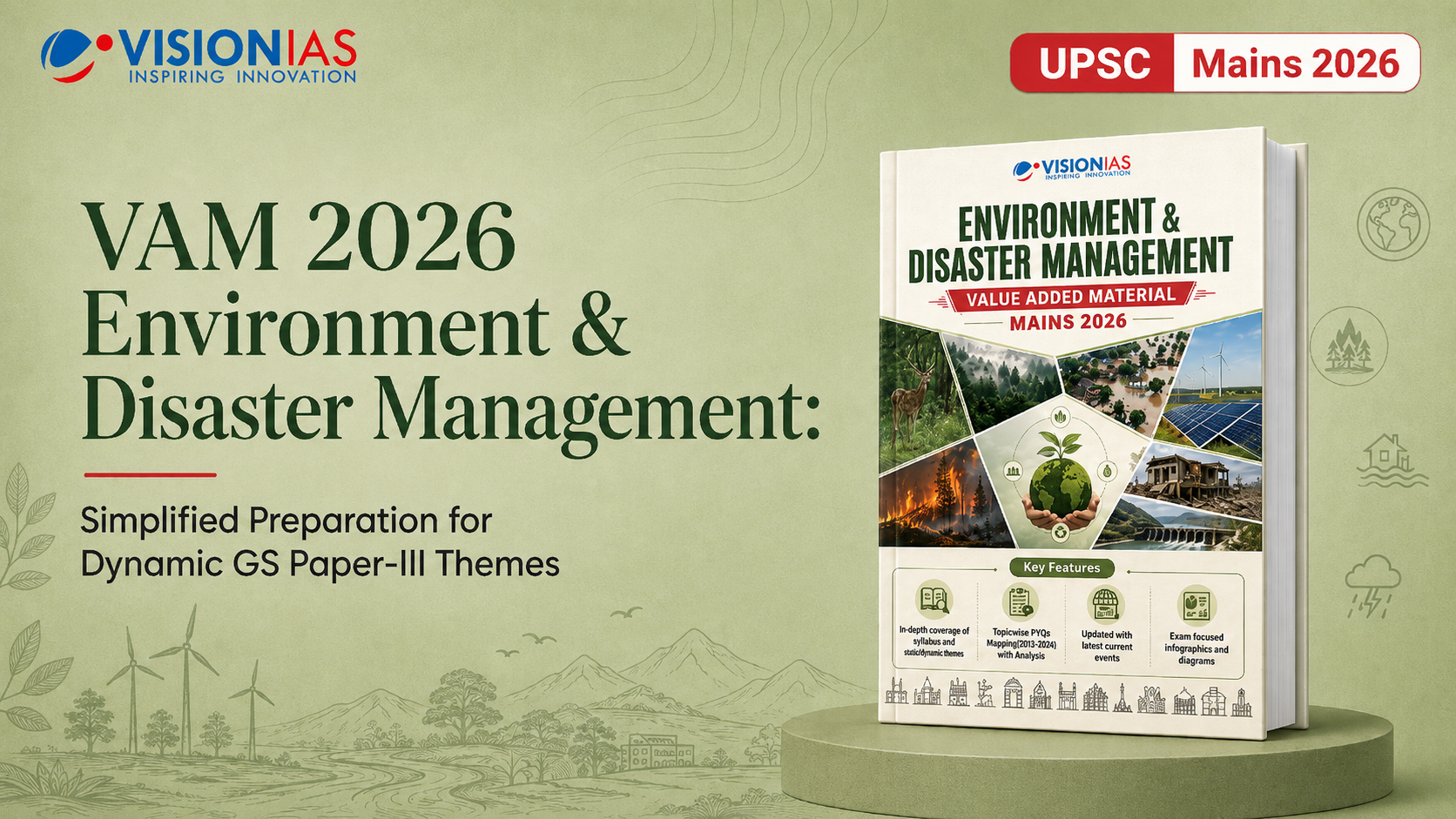
This is where VisionIAS Value Added Material (VAM) Environment & Disaster Management 2026 becomes a focused and exam-oriented resource for Mains preparation.
It is designed not merely as a compilation, but as a strategic guide that helps aspirants integrate static concepts, current developments, legal frameworks, global conventions, policy initiatives, and answer-writing frameworks in one place.
[Download VAM Environment & Disaster Management 2026 PDF]
Why Environment & Disaster Management Needs a Focused Mains Strategy
Environment and Disaster Management is not a subject that can be prepared through isolated facts. A question on wetlands may require understanding of ecosystem services, biodiversity, Ramsar Convention, “wise use”, community dependence, climate resilience and governance. A question on heatwaves may require linkage with climate change, urban planning, vulnerable populations, disaster preparedness, early warning systems and adaptation.
Similarly, a question on climate change may require understanding of scientific evidence, global negotiations, India’s NDCs, climate finance, just transition, mitigation technologies, adaptation strategies and equity concerns.
Therefore, preparation must be:
- Conceptually clear
- Current-affairs integrated
- Policy-oriented
- Convention and law aware
- Diagram and infographic friendly
- Linked with sustainable development
- Focused on answer application
VAM Environment & Disaster Management 2026 has been prepared keeping these demands in mind.
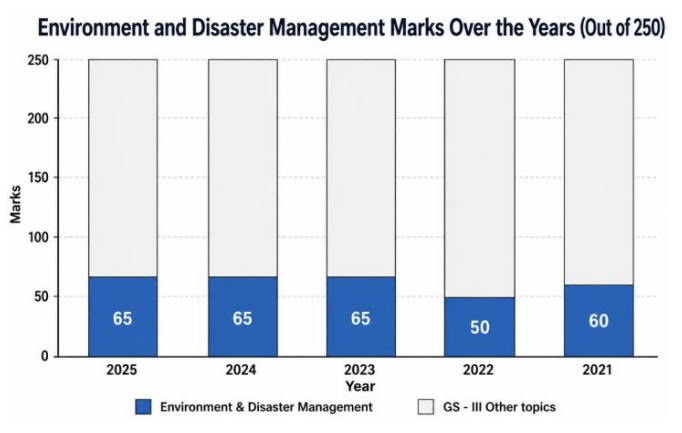
Also, Read blog to know VAM 2025 Reflection in UPSC Mains 2025 GS- 3 paper
What Makes VisionIAS VAM Environment & Disaster Management 2026 Useful?
1. PYQ-Oriented Preparation
A major strength of this VAM is its focus on Previous Year Questions (PYQs). Each major section begins with PYQs and analysis, helping aspirants understand how UPSC frames questions and what kind of depth is expected.
For example, in the section on Ecosystem, Biodiversity and Conservation, UPSC has asked questions on wetlands, Ramsar sites, carrying capacity, biodiversity variation, Biological Diversity Act, coastal erosion and sand mining. This shows that UPSC does not ask environment topics only as theory. It expects aspirants to connect ecological concepts with policy, law, conservation and sustainable development.
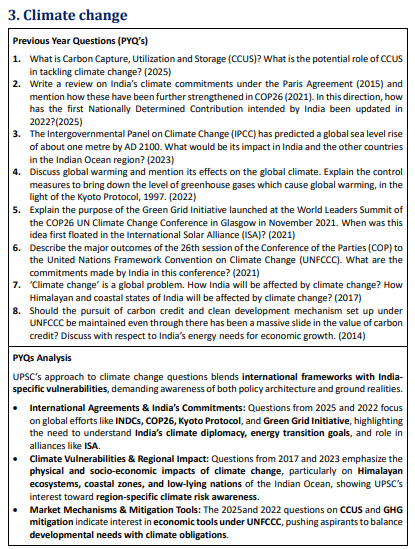
This PYQ-based approach helps aspirants prepare with precision rather than reading everything randomly.
2. Integrated Coverage of Environment and Disaster Management
The VAM covers the subject in a structured manner, moving from foundational ecological concepts to contemporary environmental governance and disaster preparedness.
The major sections include:
- Ecosystem, Biodiversity and Conservation
- Environmental Pollution and Degradation
- Climate Change
- Environmental Impact Assessment
- Disaster Management
This makes the document highly useful for GS Paper-III because it brings together environment, ecology, climate, laws, governance and disaster management in one consolidated resource.
3. Static + Current Affairs Integration
Environment and Disaster Management is a dynamic subject. Static concepts alone are not enough. Aspirants must be able to link foundational ideas with recent policies, global frameworks, amendments, court judgments, conventions and emerging challenges.
VAM Environment & Disaster Management 2026 integrates:
- Ecological concepts such as ecosystem services, ecological succession, biogeochemical cycles and carrying capacity
- Biodiversity-related developments such as Kunming-Montreal Global Biodiversity Framework and Nature-based Solutions
- Legal measures such as Wildlife Protection Act, Environment Protection Act, Biological Diversity Act and forest-related laws
- Pollution and waste management issues including air pollution, water pollution, plastic waste, e-waste and biomedical waste
- Climate change governance, COP summits, Article 6 mechanism, carbon markets, climate finance and India’s climate commitments
- EIA evolution, project classification and implementation challenges
- Disaster management framework, Disaster Management Act, funding mechanisms, major hazards and global cooperation
This makes the content directly usable in Mains answers.
4. Chronological and Conceptual Clarity
The VAM is organised in a logical sequence so that aspirants can understand the subject progressively. For instance, the environment section begins with ecosystem and biodiversity, then moves to pollution, climate change and EIA. Disaster Management begins with basic concepts, classification, cycle, institutional framework, legal architecture and then hazard-specific discussion.
This structure is useful because many aspirants struggle to connect topics. Reading in a structured sequence helps build conceptual clarity and makes revision easier.
How VAM Environment & Disaster Management Enhances Answer Writing
A good GS Paper-III answer must be structured, analytical and solution-oriented. It should include concepts, examples, policy references and way forward. VAM Environment & Disaster Management 2026 helps aspirants build this answer quality.
1. Using Concepts with Application
Environment answers become strong when concepts are explained and then applied. For example, carrying capacity is not just a definition. It can be used to analyse sustainable tourism, urban expansion, groundwater extraction, wetland degradation, hill-area development and infrastructure planning.
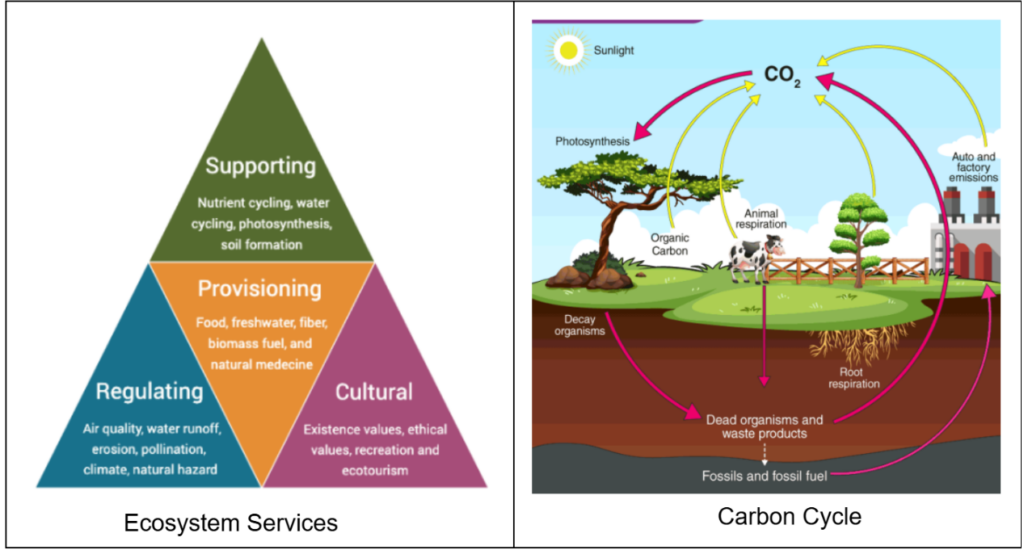
Similarly, ecosystem services can be used to explain why forests, wetlands, mangroves, coral reefs and grasslands have economic, ecological and cultural value.
2. Using Diagrams and Infographics
Environment and Disaster Management answers benefit from simple diagrams. VAM includes multiple visual elements that can be adapted in Mains answers.
Examples include:
- Ecosystem services pyramid
- Ecological succession diagram
- Carbon, nitrogen and hydrological cycle diagrams
- Biodiversity threats infographic
- Biodiversity hotspot map
- Nature-based solutions framework
- Human-wildlife conflict drivers
- Disaster Management Cycle
- Classification of disasters
- Major hazard-specific diagrams
These visuals can help aspirants present information clearly and save time in the exam hall.
3. Linking Environment with Development
UPSC often frames environment questions around the tension between development and sustainability. The VAM helps aspirants address this balance.
For example:
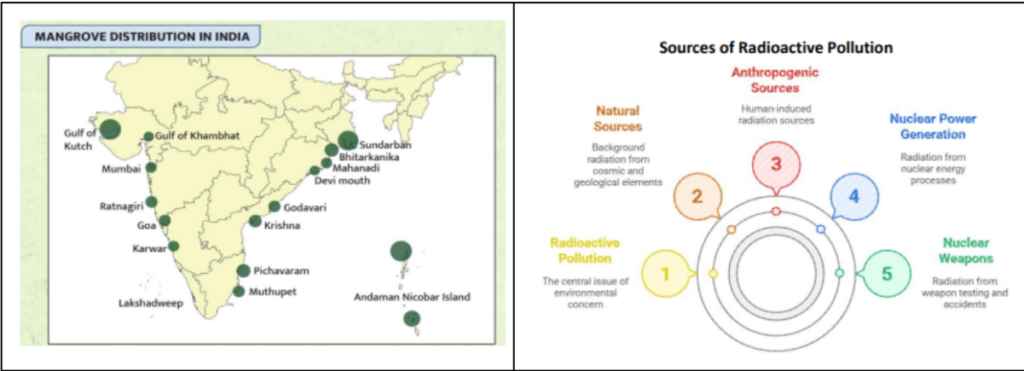
- Coastal development must be balanced with mangrove protection, CRZ norms and community livelihoods.
- Biodiversity conservation must include local communities and indigenous knowledge.
- EIA must support both environmental safeguards and transparent project appraisal.
- Climate action must address equity, finance and just transition.
- Disaster management must shift from relief-centric response to preparedness, mitigation and resilience.
Such linkages help aspirants write answers that are not one-sided.
4. Incorporating Laws, Conventions and Institutions
Environment answers become credible when supported by legal and institutional references. The VAM includes important laws, frameworks and institutions such as:
- Wildlife Protection Act, 1972
- Environment Protection Act, 1986
- Biological Diversity Act, 2002
- Forest Conservation-related laws
- National Wildlife Action Plan
- Ramsar Convention
- Convention on Biological Diversity
- Kunming-Montreal Global Biodiversity Framework
- UNFCCC, Kyoto Protocol and Paris Agreement
- Disaster Management Act, 2005
- NDMA, NDRF, SDRF and related institutional mechanisms
These references help aspirants make answers more specific and policy-relevant.
Sample: How VAM Can Improve an Answer
Let us take an example from the ecosystem and biodiversity section.
Possible UPSC-Style Question
“Define the concept of carrying capacity of an ecosystem. Explain how understanding this concept is vital while planning for sustainable development of a region.”
A generic answer may define carrying capacity and mention overuse of resources. However, with the help of VAM Environment & Disaster Management, the answer can be structured more effectively.
Introduction
Carrying capacity refers to the maximum level of population or resource use that an ecosystem can support sustainably without degrading its ecological base.
Body Part 1: Why Carrying Capacity Matters
Explain its significance in planning:
- Prevents resource depletion
- Maintains ecological balance
- Guides land-use planning
- Helps assess tourism pressure in fragile regions
- Prevents over-extraction of groundwater
- Supports sustainable urbanisation
- Reduces disaster vulnerability in ecologically fragile areas
Body Part 2: Consequences of Exceeding Carrying Capacity
Use points such as:
- Resource depletion
- Population crash or die-off
- Ecosystem degradation
- Loss of biodiversity
- Decline in future productivity
- Increased vulnerability to climate and disaster risks
Body Part 3: Examples
Add suitable examples:
- Over-tourism in Himalayan towns
- Groundwater stress in the Indo-Gangetic Plain
- Urban flooding due to concretisation and poor drainage
- Wetland degradation due to encroachment
- Overfishing and collapse of aquatic food webs
Conclusion
Conclude that sustainable development requires respecting ecological limits. Carrying capacity should be integrated into EIA, regional planning, tourism policy, urban governance and disaster risk reduction.
This structure makes the answer conceptual, example-based, analytical and policy-oriented.
Key Areas Covered in VAM Environment & Disaster Management 2026
1. Ecosystem, Biodiversity and Conservation
This section covers ecosystem services, ecological succession, biogeochemical cycles, carrying capacity, biodiversity variation in India, climate change and biodiversity, invasive alien species, land-use change, conservation frameworks, biodiversity hotspots, citizen movements, Nature-based Solutions, legal measures, forests, sacred groves, community forest governance, mangroves, wetlands and blue economy.
This section is useful for questions on biodiversity, conservation, wetlands, mangroves, forests, ecosystem services and sustainable development.
2. Environmental Pollution and Degradation
This section deals with air pollution, water pollution, oil pollution, soil pollution, noise pollution, radioactive pollution, light pollution, plastic pollution, solid waste, hazardous waste, biomedical waste, e-waste and plastic waste management.
It helps aspirants prepare for questions on pollution control, urban environmental governance, waste management and public health.
3. Climate Change
The climate change section covers scientific evidence, causes, global warming, IPCC AR6, impacts of climate change, climate governance, UNFCCC, Kyoto Protocol, Paris Agreement, COP28 to COP30, Article 6 mechanism, carbon markets, climate finance, just transition, climate technologies, adaptation, mitigation, India’s climate policy, NAPCC, SAPCC, updated NDCs, net-zero by 2070, Green Credit Programme and climate indices.
This section is important for writing answers that connect climate science with policy, equity and governance.
4. Environmental Impact Assessment
The EIA section explains the basics of EIA, evolution of EIA in India, project classification under EIA Notification 2006, EIA Notification 2006 vs Draft 2020, implementation challenges, benefits and limitations.
This section is useful for questions on environmental governance, project appraisal, sustainable infrastructure and participatory decision-making.
5. Disaster Management
The Disaster Management section covers the meaning of disaster, classification of disasters, Disaster Management Cycle, phases of disaster management, legal framework, constitutional context, Disaster Management Act, 2005, financial arrangements such as NDRF and SDRF, major hazards and international cooperation.
Hazard-specific coverage includes:
- Earthquake
- Tsunami
- Floods
- Landslides
- Cloudburst
- Lightning
- Cyclone
- Coastal erosion
- Drought
- Wildfires
- Industrial disasters
- Stampede
- Heatwaves
This section helps aspirants move from a relief-centric view of disasters to a preparedness, mitigation and resilience-based approach.
How to Use VAM Environment & Disaster Management 2026 Effectively
Step 1: Begin with PYQ Analysis
Before reading each section, first go through the PYQs and analysis. This will help you understand whether UPSC is asking conceptual, policy-based, example-based or application-oriented questions.
Step 2: Build Conceptual Notes
Focus on core concepts such as ecosystem services, carrying capacity, biodiversity hotspots, invasive species, climate finance, just transition, EIA, disaster risk reduction and resilience.
Step 3: Prepare Diagram Bank
Create a small diagram bank from the VAM. Useful diagrams include ecosystem services, ecological succession, carbon cycle, nitrogen cycle, hydrological cycle, biodiversity threats, human-wildlife conflict and disaster management cycle.
Step 4: Make a Laws and Conventions Sheet
Prepare a one-page list of major laws, conventions and institutions. This will help you quickly enrich answers.
Step 5: Link Static with Current Affairs
Connect concepts with recent climate conventions, legal amendments, court judgments, extreme weather events, pollution trends, disaster cases and India’s policy commitments.
Step 6: Practise Theme-Linking
Many questions connect two or more themes. Practise answer frameworks such as:
- Climate change and biodiversity
- Urbanisation and disaster vulnerability
- Pollution and public health
- Forest conservation and tribal livelihoods
- EIA and sustainable development
- Wetlands and flood mitigation
- Heatwaves and urban planning
- Nature-based solutions and climate adaptation
Step 7: Revise with Examples
Maintain a list of 20–25 examples from India and the world, such as Ramsar sites, mangrove restoration, human-wildlife conflict, forest fires, urban flooding, coastal erosion, heatwaves and cyclone preparedness.
Last-Mile Benefits of VAM Environment & Disaster Management 2026
During the final phase before Mains, aspirants need concise and high-utility resources. VAM Environment & Disaster Management 2026 helps by providing:
- PYQ-based preparation
- Structured syllabus coverage
- Static-current integration
- Updated conventions, policies and laws
- Exam-focused infographics and diagrams
- Topic-wise analytical frameworks
- Disaster-specific ready-to-use points
- Climate and environment governance linkages
- Examples useful for GS Paper-III answers
It allows aspirants to move from scattered reading to organised revision and answer application.
[Download VAM Environment & Disaster Management 2026 PDF]
Final Word
Environment and Disaster Management can become a scoring area in GS Paper-III when preparation is conceptual, current, analytical and solution-oriented. Aspirants must not treat this subject as a list of conventions, acts or disasters. They must understand the interconnections between ecology, economy, climate, society, governance and resilience.
VisionIAS VAM Environment & Disaster Management 2026 is designed to support this approach. It helps aspirants revise systematically, enrich answers with relevant examples, use diagrams effectively, and connect environmental issues with sustainable development and disaster risk reduction.
Use it as an answer-enrichment tool. Read the PYQ analysis, mark diagrams, revise key laws and conventions, practise theme-linking, and apply the content in Mains-style answers.
When ecological understanding meets policy clarity and structured presentation, answer quality improves. Let VAM Environment & Disaster Management 2026 be your strategic companion for UPSC Mains GS Paper-III.
VisionIAS Value added Material (VAM) Reflections in UPSC GS paper 2025
Below are the related links showcasing how VisionIAS VAM (Value added material) were reflected in UPSC GS Papers 2025 and how they proved helpful in enhancing UPSC Mains answer writing.
| GS Paper 1 : Reflections from VAM | GS Paper 2 : Reflections from VAM |
| GS Paper 3 : Reflections from VAM | GS Paper 4 (Ethics) : Reflections from VAM |
FAQs on VisionIAS VAM Environment & Disaster Management 2026
1. What is VisionIAS VAM Environment & Disaster Management 2026?
VisionIAS Value Added Material Environment & Disaster Management 2026 is an exam-oriented resource for UPSC CSE Mains GS Paper-III. It covers environment, biodiversity, pollution, climate change, EIA and disaster management in a structured and answer-ready manner.
2. How does this VAM help in answer writing?
It helps aspirants write better answers through PYQ analysis, conceptual clarity, legal and policy references, current developments, examples, infographics and diagrams.
3. Is this useful for last-minute revision?
Yes. Its structured chapters, PYQ-based approach, diagrams, conventions, laws and topic-wise frameworks make it useful for quick and effective revision before Mains.
4. What are the major areas covered in this VAM?
It covers Ecosystem and Biodiversity, Environmental Pollution and Degradation, Climate Change, Environmental Impact Assessment and Disaster Management.
5. What is the best way to use this VAM?
Start with PYQ analysis, revise concepts and diagrams, prepare a laws-and-conventions sheet, link static topics with current affairs, and practise Mains answers using the examples and frameworks given in the document.