Abhyaas
Year After Year, UPSC Toppers Choose Abhyaas: Insights Since CSE 2020







Every year, when the Civil Services Examination results are announced, the stories of successful candidates offer valuable insights into how aspirants navigate one of the most demanding examinations in the country. While each journey is unique, certain patterns consistently emerge in the preparation strategies of top performers.
One such pattern is the role of structured practice and exam simulation before the Preliminary Examination.
The UPSC Civil Services Preliminary Examination 2026, scheduled for 24 May 2026, will once again serve as the first critical stage of the examination process. For aspirants, this stage is not merely about completing the syllabus but about demonstrating the ability to apply knowledge under strict time constraints and high competition.
In such an environment, the final months before the examination become particularly significant. This is the period when preparation gradually shifts from content accumulation to performance refinement.
The Prelims Stage: Where Preparation Meets Performance
The Preliminary Examination often appears deceptively straightforward. Yet, every year, thousands of well-prepared aspirants fall short by a narrow margin. Several factors make this stage uniquely demanding.
- Vast Syllabus, Limited Time: The General Studies paper draws questions from diverse areas—Polity, Economy, Geography, History, Environment, Science & Technology, and Current Affairs. Aspirants must integrate knowledge across subjects rather than approach them in isolation.
- Precision in Attempt Strategy: UPSC Prelims is not only about knowing the answer but also about deciding whether to attempt a question or leave it. Managing negative marking becomes an essential skill.
- Decision Making Under Pressure: Candidates must analyze 100 questions within a limited time window while maintaining concentration and accuracy.
These aspects highlight why many aspirants find the actual examination environment very different from routine study practice.
The Role of Exam Simulation in UPSC Preparation
One of the most effective ways to prepare for the realities of the exam hall is through simulated examinations that mirror the UPSC environment. Simulated tests help aspirants experience:
- The pace of solving questions within limited time
- The psychological pressure of a competitive exam setting
- The need for rapid decision-making
- The consequences of negative marking
Over the years, such simulations have become an important component of serious aspirants’ preparation strategies. Among these initiatives, Abhyaas, conducted by VisionIAS, has emerged as a widely recognized nationwide simulation for the UPSC Preliminary Examination.
Abhyaas: A Nationwide Prelims Simulation
Abhyaas is designed to replicate the actual conditions of the UPSC Preliminary Examination, enabling aspirants to experience the examination environment before the real test day.
Conducted across 100+ cities in India, it allows candidates to attempt full-length General Studies (GS) and CSAT papers in an offline OMR-based format, similar to the actual examination.
This year, Abhyaas Prelims 2026 will be conducted on: 5 April, 19 April, and 10 May
These three rounds provide aspirants with an opportunity to progressively refine their strategy before the actual examination.

Register : Abhyaas Prelims 2026
Key Aspects that Make Abhyaas Prelims Valuable
- Realistic Examination Experience: Abhyaas recreates the physical exam environment, allowing aspirants to experience the atmosphere of a competitive examination hall.
- UPSC-Aligned GS and CSAT Questions: The papers are designed to reflect the conceptual depth and difficulty level commonly observed in the UPSC Preliminary Examination.
- All India Benchmarking: Through nationwide participation, aspirants can evaluate their preparation against thousands of serious competitors.
- In-depth Performance Analysis: Section-wise insights help identify weak areas and improve test strategy.
- Live Test Discussions: Expert-led sessions explain the logic behind questions and build smarter solving techniques.
- Iterative Improvement: Since the simulation is conducted in multiple rounds, aspirants can apply lessons from one test to improve performance in the next.
- One-to-One Mentoring: Personalized feedback offers actionable steps for refining preparation.
Through these features, Abhyaas serves as a practice platform that helps aspirants convert preparation into exam readiness.
UPSC Toppers & Abhyaas: A Glimpse Since 2020
Over the years, several high-ranking candidates have attempted Abhyaas as part of their preparation journey. Their experiences highlight the role that structured practice and exam simulation can play during the final stage of Prelims preparation. A glimpse from recent years is presented below.
UPSC CSE 2020
Shubham Kumar – AIR 1
Yash Jaluka – AIR 5
UPSC CSE 2021
Ankita Agarwal – AIR 2
Aishwarya Verma – AIR 4
UPSC CSE 2022
Ishita Kishore – AIR 1
Waseem Ahmad Bhat – AIR 7
UPSC CSE 2023
Aditya Srivastava – AIR 1
Animesh Pradhan – AIR 2
UPSC CSE 2024
Shakti Dubey – AIR 1
Harshita Goyal – AIR 2
UPSC CSE 2025
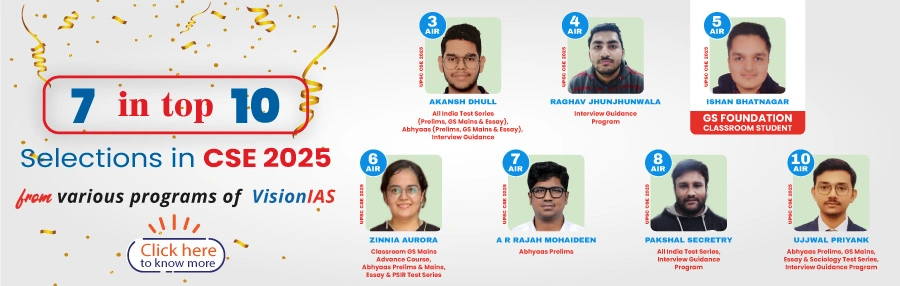
Akansh Dhull – AIR 3
Zinnia Aurora – AIR 6
Each of these journeys reflects the importance of disciplined preparation combined with strategic practice.
Learning from the UPSC Preparation Journeys of Toppers
While there is no single formula for success in the Civil Services Examination, certain preparation principles remain consistent among successful candidates.
- Consistent Revision: Rather than constantly expanding resources, toppers prioritize revisiting core subjects multiple times.
- Practice Through Full-Length Tests: Simulated tests (GS & CSAT) help aspirants evaluate how their preparation translates into marks.
- Analytical Review of Performance: Successful candidates carefully analyze their mistakes after every test and refine their strategy accordingly.
- Maintaining Exam Composure: Repeated practice under simulated conditions helps aspirants approach the actual exam with greater confidence.
These habits collectively help transform preparation into measurable performance.
Conclusion
The Preliminary Examination represents the first decisive step in the Civil Services journey. While preparation requires dedication and discipline, the final phase often determines how effectively that preparation translates into results.
Year after year, the journeys of successful candidates highlight the importance of structured revision, exam simulation, and strategic practice in the weeks leading up to the examination.
Initiatives such as Abhyaas Prelims provide aspirants with an opportunity to experience the examination environment, evaluate their preparation realistically, and refine their approach before the actual UPSC Prelims.
As the countdown to UPSC Prelims 2026 begins, aspirants must focus not only on studying more but on practicing smarter and preparing with clarity and confidence.