Current Affairs
Israel-Lebanon Ceasefire: Conflict, and the Road to Peace
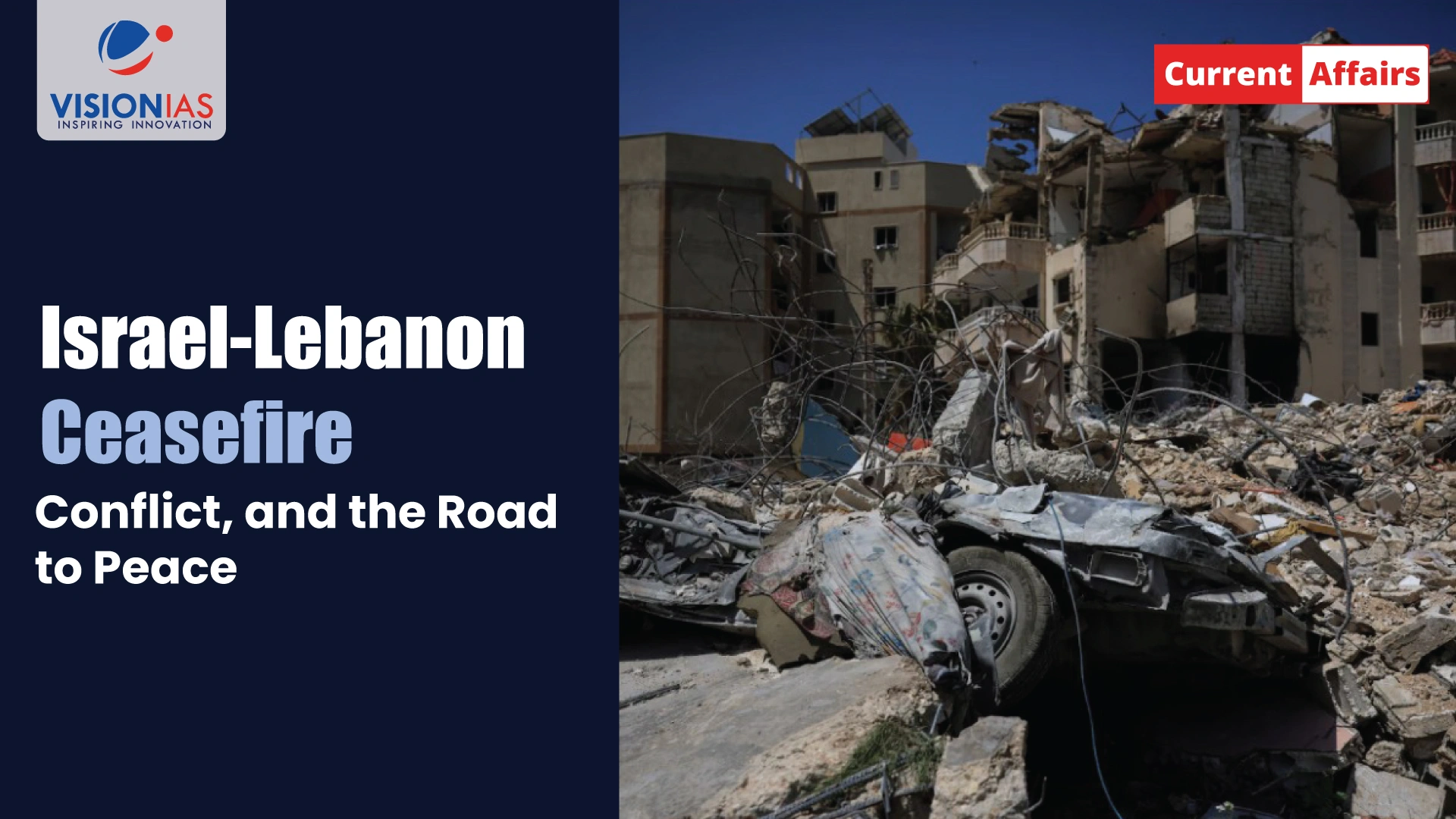


















UN chief welcomes Israel-Lebanon ceasefire, urges full compliance with international law.
The Israel-Lebanon war has thrust the Middle East into a humanitarian and geopolitical crisis. After weeks of conflict between Israeli forces and the Iran-backed militant group Hezbollah, a 10-day ceasefire came into effect on April 17, 2026, following an announcement by the U.S. President Donald Trump.
The Israel-Lebanon ceasefire has been welcomed by UN Secretary-General António Guterres, who urged all parties to “fully respect the ceasefire and comply with international law at all times.” Yet, with violations reported within hours of its announcement and underlying tensions left unresolved, the truce is less a peace settlement and more a pause in a conflict that has reshaped the Levant region.
Background
Collapse of the 2024 Ceasefire
The roots of the 2026 escalation lie in the failure of the November 2024 cessation of hostilities agreement. That deal mandated the Israel Defense Forces (IDF) to withdraw from southern Lebanon within 60 days, while Hezbollah was required to pull back north of the Litani River, handing security responsibility to the Lebanese Armed Forces (LAF) and UNIFIL peacekeepers.
However, the truce remained fragile. UNIFIL monitors recorded over 10,000 air and ground violations during this period. Hezbollah rebuilt its militant infrastructure, while Israeli strikes on alleged weapons depots continued. By early 2026, the conditions for a resumption of the Israel-Lebanon war were in place.
Regional Trigger: US-Iran Conflict
The trigger came on February 28, 2026, when the United States and Israel launched strikes on Iranian nuclear infrastructure, ballistic missile facilities, and naval assets. The assassination of Iranian Supreme Leader Ali Khamenei sent shockwaves across the region, prompting Hezbollah to resume rocket fire into northern Israel on March 2, 2026, ending the 2024 truce.
What followed was rapid escalation: Hezbollah fired nearly 2,000 rockets and drones at Israeli airbases; Israel launched a ground operation into southern Lebanon by March 16; and rhetoric from the Israeli cabinet grew annexationist, with Finance Minister Bezalel Smotrich calling for Israel’s borders to be extended to the Litani River.
Human Cost: Deepening Humanitarian Crisis
The Israel-Lebanon conflict has triggered one of the worst humanitarian emergencies in the region’s recent history:
- Over 1.2 million people, approximately 20% of Lebanon’s population, have been displaced.
- More than 2,100 people have been killed in Lebanon, including civilians and militants.
- 300,000 children have been displaced, facing trauma and lack of access to schooling.
- 61 healthcare facilities, including 55 primary care centres and 6 hospitals, have been shut down, with over 133 attacks on healthcare workers recorded.
- Infrastructure damage is estimated at USD 14 billion, encompassing roads, bridges, power grids, and water systems.
The concept of “domicide”, the systematic destruction of homes to render a territory uninhabitable, has been invoked by UN experts to describe Israeli strikes targeting Shiite areas of southern Lebanon and Beirut’s southern suburbs.
The UN launched a Flash Appeal of USD 308.3 million to cover the first three months of crisis relief, but as of mid-April, only 22% of these funds had been received.
Key Terms of the Israel-Lebanon Ceasefire
The Memorandum of Understanding (MOU) establishing the ceasefire contains several provisions:
- Halt to offensive operations: Both Israel and Lebanon agreed to cease offensive military action by land, air, and sea.
- 10-km Israeli security zone: Israeli troops will not withdraw during the truce. They will maintain a security zone 10 kilometres inside southern Lebanon.
- Right to self-defence: Israel retains the right to strike “planned, imminent, or ongoing attacks,” a clause critics warn risks escalation.
- Lebanese state responsibility: The Lebanese government must take “meaningful steps” to prevent Hezbollah from launching operations. The LAF and ISF are recognised as the exclusive armed forces permitted to operate.
- Extension clause: The truce may be extended if Lebanon demonstrates “effective sovereignty” and progress is shown in negotiations.
Hezbollah’s response has been cautious. Lawmaker Hassan Fadlallah stated the group would watch for “practical and effective” Israeli commitment but noted that continued occupation grants Lebanon the “right to resist.”
Global impact of Israel-Lebanon Ceasefire
The Israel-Lebanon ceasefire has consequences that extend well beyond the borders of the Levant. The conflict and its pause have set off a chain of economic, diplomatic, and institutional effects that touch nations across the globe.
Energy Markets and the Strait of Hormuz
The most direct global impact of the Israel-Lebanon war has been on energy markets. Iran’s closure of the Strait of Hormuz, through which one-fifth of the world’s traded oil passes, caused Brent crude to surge to around USD 94 per barrel. This spike contributed to inflation in oil-importing nations, strained household budgets, and disrupted industrial supply chains worldwide.
The ceasefire, and the hint of the Strait’s reopening, brought some stabilisation to oil prices, offering relief to economies dependent on energy imports, including India.
Impact on Global Diplomacy and Multilateral Institutions
The conflict has exposed the limits of existing multilateral frameworks. The UN Security Council’s Resolution 2817, adopted in March 2026, failed to halt hostilities, raising questions about the effectiveness of UN-led conflict resolution in the current geopolitical environment.
UNIFIL, the UN peacekeeping force in Lebanon, found itself caught in crossfire, with its mandate set to expire in December 2026. Calls have grown for a new US-supervised mechanism to replace the ageing UN peacekeeping framework, a shift that could redefine how the international community manages conflict zones going forward.
Conclusion
The Israel-Lebanon ceasefire of April 17, 2026, is an important yet fragile diplomatic development. While it has provided relief from bombardment and created space for humanitarian access, the causes of the Israel-Lebanon war remain unresolved: Hezbollah’s position within the Lebanese state, Iran’s regional ambitions, and Israel’s demand for a secure northern border.
With the broader US-Iran truce expiring on April 22 and early ceasefire violations already reported, the 10-day window represents not peace, but a window for diplomacy.
Master Digital Age Governance & Technology Trends with VisionIAS Comprehensive Current Affairs →
Israel-Lebanon Ceasefire FAQs
1. When did the Israel-Lebanon ceasefire take effect?
Ans. April 17, 2026.
2. How long is the Israel-Lebanon ceasefire?
Ans. 10 days.
3. What military zone did Israel retain under the ceasefire terms?
Ans. A 10-kilometre security zone inside southern Lebanon.