Current Affairs
India Remembers Chhatrapati Shivaji Maharaj on His 346th Death Anniversary
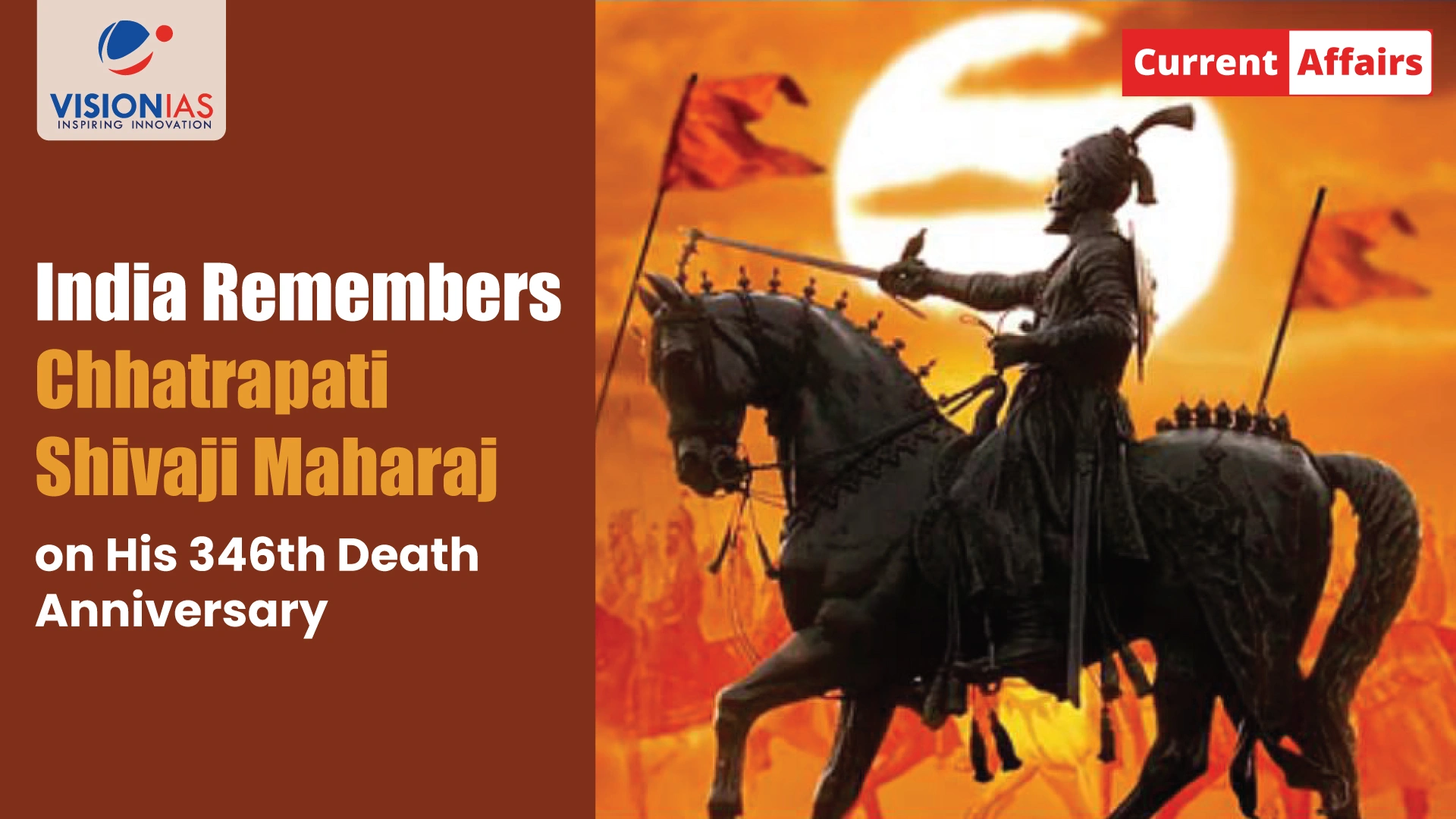
















On April 3, 2026, India observes the 346th death anniversary of Chhatrapati Shivaji Maharaj, the founder of the Maratha Empire and one of the most consequential figures in the history of the Indian subcontinent.
Chhatrapati Shivaji Maharaj, the founder of the Maratha Empire and an eternal symbol of self-respect, courage, and Swarajya, is being remembered across India today on his 346th death anniversary. The nation pauses to honour a king whose life continues to shape India’s identity, governance, and spirit of resilience.
His legacy of Hindavi Swarajya, self-rule rooted in justice, indigenous strength, and people-first governance is not merely a chapter in history. It is a living ideal, invoked by policymakers, soldiers, and citizens alike in contemporary India.
The Making of a Sovereign King
Born on February 19, 1630, at Shivneri Fort in Pune district, Maharashtra, Shivaji Raje Bhonsle rose from a regional Maratha chieftain to become the founder of the Maratha Empire, one of the most formidable powers in 17th-century India.
His mother, Rajmata Jijabai, instilled in him a fierce sense of cultural and religious identity. His guardian, Dadoji Kondadeo, trained him in military strategy, administration, and revenue management. These two personalities shaped his moral convictions and strategic intelligence, defining his reign.
In 1674, he was formally crowned as Chhatrapati at Raigad Fort, establishing himself as the sovereign ruler of an independent Maratha state. He passed away on April 3, 1680, at the same fort, leaving behind a legacy that has only grown stronger with time.
Military Genius: Art of Ganimi Kava
Chhatrapati Shivaji Maharaj’s military brilliance lay in his mastery of guerrilla warfare, known in Marathi as “Ganimi Kava.” Even Aurangzeb’s Generals referred to him as the “Mountain Rat”, a grudging acknowledgement of his ability to strike swiftly and vanish into the Sahyadri hills.
Key Battles and Conquests
- Capture of Torna Fort (1646): At just 16, Chhatrapati Shivaji Maharaj seized Torna Fort from the Bijapur Sultanate, his first declaration of independent intent.
- Battle of Pratapgad (1659): His most celebrated military triumph. Facing the far larger Adil Shahi army under General Afzal Khan, Chhatrapati Shivaji Maharaj used the dense forests of Jawali to set a trap. The decisive elimination of Afzal Khan followed by a comprehensive ambush confirmed him as a military strategist of the highest order.
- Battle of Salher (1672): The first major Maratha victory against the Mughal Empire, a turning point in Deccan geopolitics.
- Escape from Agra (1666): When Aurangzeb placed him under house arrest, Chhatrapati Shivaji Maharaj escaped with his son Sambhaji (later Chhatrapati Sambhaji Maharaj) on August 17, 1666, a feat celebrated as much for its audacity as its planning.
His military approach rested on three pillars: a nimble and loyal infantry (the Mavlas), a fast-moving cavalry, and a network of over 240–280 hill forts across the Deccan. These forts were not just defensive structures, they were regional administrative hubs and symbols of sovereignty.
Father of the Indian Navy: Maritime Vision Ahead of His Time
Chhatrapati Shivaji Maharaj was the first Indian ruler to recognize the strategic importance of a naval force. While contemporaries focused on land campaigns, he understood that the Konkan coastline was threatened by the Portuguese, the British, and the Siddis of Janjira and needed dedicated maritime defence.
He built an indigenous fleet designed for the reef-filled coastal waters of the Konkan, crewed by local Koli and Konkani Muslim communities who understood the tides intimately. His first major marine fort, Sindhudurg, constructed between 1664 and 1667 off the Malvan coast, served as the headquarters of the Maratha navy.
This vision of maritime sovereignty earned him the title “Father of the Indian Navy,” a distinction that carries even greater significance as modern India continues to expand its naval presence in the Indian Ocean.
Administrative Reforms: Ashtapradhan and Ryotwari System
Beyond the battlefield, Chhatrapati Shivaji Maharaj built institutions that outlasted him by centuries.
Ashtapradhan Council
At his 1674 coronation, Shivaji established the Ashtapradhan, a council of eight ministers, each holding a specific portfolio covering administration, finance, military affairs, foreign relations, justice, and religion. This was a major departure from feudal governance:
- Ministers were paid in cash, not land grants, eliminating the corruption prevalent in the Jagirdari system.
- Each minister was supported by a structured bureaucracy including auditors and deputies.
- The council ensured specialized, accountable governance, a model that inspired subsequent Maratha leadership and was even studied by British colonial administrators.
Ryotwari Revenue System
Chhatrapati Shivaji Maharaj’s Ryotwari system recognized farmers as the direct owners of their land, removing exploitative intermediaries. Taxes were assessed on actual land productivity. In years of crop failure, the state provided remissions and interest-free loans.
He abolished oppressive levies like the pilgrimage tax and forced labour, replacing them with reasonable trade duties. This people-first approach to governance is what modern commentators term his “people-centric administration”, a phrase echoed in political tributes even today.
Contemporary Relevance: Administration, Forts and Military Prowess
The Maratha forts such as Raigad, Rajgad, Pratapgad, Sinhagad, Sindhudurg, and Vijaydurg continue to hold strong contemporary relevance as models of strategic planning and sustainable architecture. Coastal forts like Sindhudurg and Vijaydurg are especially relevant in the context of India’s growing focus on maritime security and safeguarding sea routes in the Indian Ocean Region. This is reflected in the Indian Navy’s New Ensign inspired by Chhatrapati Shivaji Maharaj’s octagonal seal.
Architecturally, these forts demonstrate eco-sensitive construction, with features such as rainwater harvesting, use of local materials, and climate-adaptive designs. These principles align closely with modern priorities of sustainability and disaster resilience. Their recognition in UNESCO’s World Heritage list has further enhanced their role in heritage conservation and tourism-led local development.
Chhatrapati Shivaji Maharaj’s broader administrative and strategic innovations also remain highly relevant. His Ashtapradhan council reflected early decentralised governance with functional specialisation. The Ryotwari system anticipated later agrarian reforms by promoting direct state-peasant relations. Moreover, Ganimi Kava, emphasizing speed, intelligence, and asymmetric tactics continues to inform modern military thinking, especially in unconventional warfare.
Conclusion
The legacy of Chhatrapati Shivaji Maharaj is not confined to history, it continues to actively inform India’s present and future. His vision of Swarajya, rooted in accountable governance, strategic autonomy, and people-centric policies, finds reflection in contemporary institutions and national priorities. From decentralised administration to maritime security and sustainable development, his ideas remain deeply relevant.
As India navigates complex geopolitical and developmental challenges, Chhatrapati Shivaji Maharaj’s life offers not just inspiration but a practical framework where strength is balanced with justice, and power is exercised with responsibility.
Master Digital Age Governance & Technology Trends with VisionIAS Comprehensive Current Affairs →
Chhatrapati Shivaji Maharaj FAQs
1. What was Chhatrapati Shivaji Maharaj’s guerrilla warfare strategy called?
Ans. Ganimi Kava.
2. Why is Chhatrapati Shivaji Maharaj called the Father of the Indian Navy?
Ans. He was the first Indian ruler to build an indigenous naval fleet to defend the Konkan coastline.
3. What was the Ashtapradhan council established by Chhatrapati Shivaji Maharaj?
Ans. It was a council of eight ministers, each overseeing a specific portfolio like finance, military, and justice.
4. Which fort did Chhatrapati Shivaji Maharaj capture as his first act of independence?
Ans. Torna Fort, in 1646.
5. What revenue system did Chhatrapati Shivaji Maharaj introduce to protect farmers?
Ans. The Ryotwari system, which recognised farmers as direct landowners and eliminated exploitative intermediaries.