Current Affairs
India Observes National Technology Day: Commemorating 1998 Pokhran-II Nuclear Tests
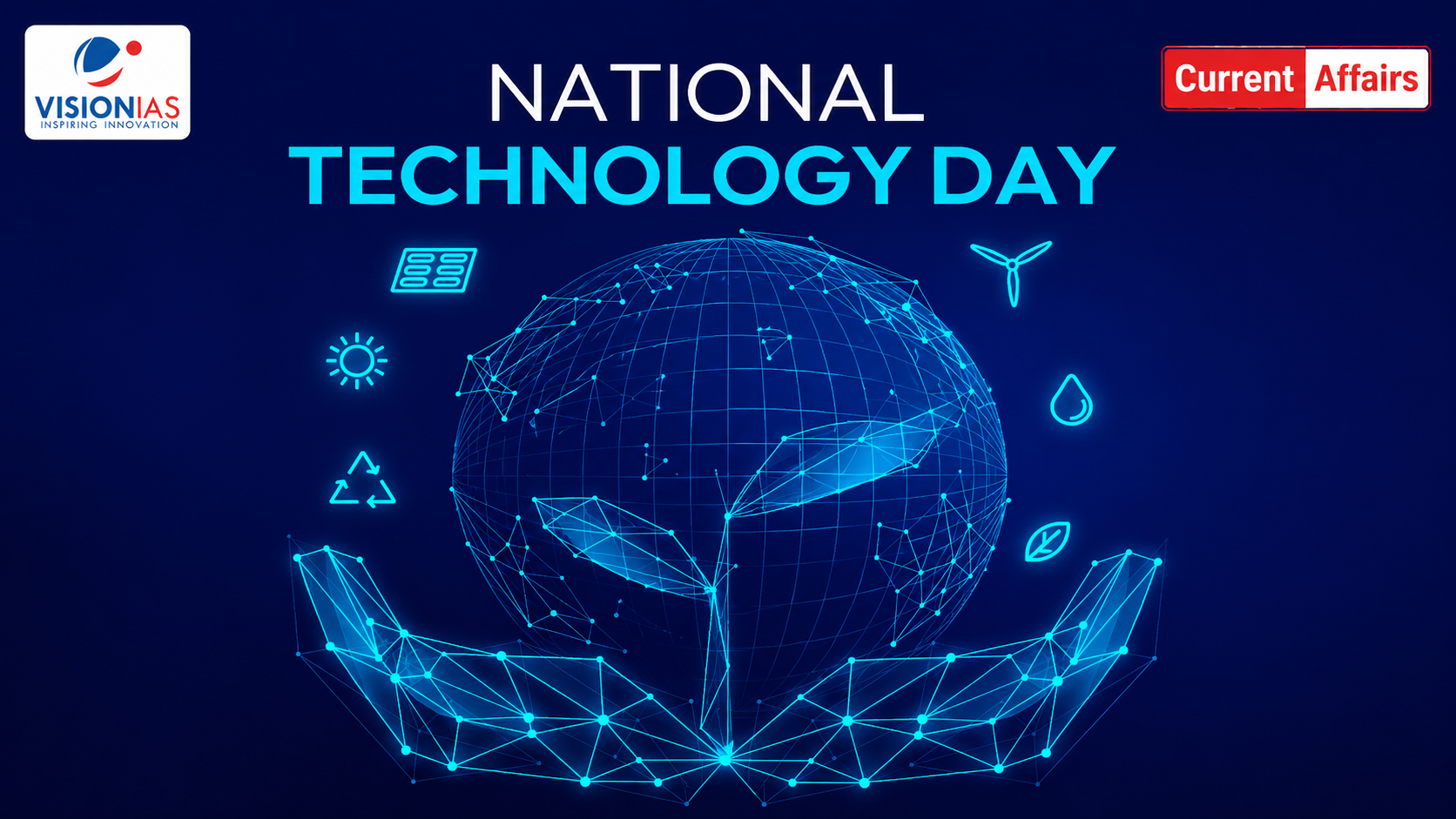


























India observes National Technology Day every year on 11 May to commemorate the successful conduct of the Pokhran-II nuclear tests in 1998 under Operation Shakti at Pokhran, Rajasthan.
Every year on May 11, India observes National Technology Day to commemorate one of the most significant milestones in the country’s scientific history. The day marks the anniversary of Operation Shakti, the nuclear tests conducted at Pokhran, Rajasthan in 1998, when India demonstrated its nuclear weapons capability and emerged as a responsible nuclear state.
It is also a day to honour the contributions of Indian scientists, researchers, and engineers who have strengthened the country’s strategic and technological capabilities. In 2026, National Technology Day carries a theme of “Responsible Innovation for Inclusive Growth”, building on the foundation laid by the scientists of 1998 while steering India’s technological future toward sustainability, equity, and self-reliance.
Operation Shakti 1998: Genesis of National Technology Day
The roots of National Technology Day lie in the events of May 11 and 13, 1998, when India conducted five underground nuclear tests at the Pokhran Test Range in the Thar Desert of Rajasthan. Codenamed Operation Shakti, this was the result of decades of indigenous scientific effort.
Background: Why India Conducted the Tests
India’s journey toward nuclear capability began following the 1964 Chinese nuclear test, which altered the security dynamics of the region. While India had demonstrated a peaceful nuclear explosion capability in 1974 under Operation Smiling Buddha, the 1998 tests were a definitive assertion of military nuclear status. They were conducted under strict secrecy to avoid detection by foreign surveillance satellites. The tests validated India’s ability to design and deploy nuclear weapons across a range of yields, giving the country both tactical and strategic flexibility.
Five Tests of Operation Shakti
The operation involved three devices detonated on May 11, followed by two sub-kiloton devices on May 13. The tests covered a range of device types and scientific objectives:
- Shakti I (May 11): A two-stage thermonuclear device with a declared yield of 45 kiloton (kt), tested at a controlled yield to validate India’s fusion weapon design and radiation implosion capability.
- Shakti II (May 11): A 15 kt fission device, representing a weaponised version of the earlier 1974 design with modifications for reduced size and weight for delivery integration.
- Shakti III (May 11): A sub-kiloton device of around 0.2 kt, aimed at validating low-yield weapon designs and related subsystems.
- Shakti IV (May 13): A sub-kiloton device of approximately 0.5 kt, intended to test experimental design parameters and tactical applications.
- Shakti V (May 13): A sub-kiloton device of around 0.3 kt, contributing to the validation of advanced weapon-related concepts and precision design capabilities.
The thermonuclear test was particularly significant because it demonstrated India’s indigenous capability in two-stage nuclear weapon design, supported by advances in shock-wave physics, materials science, radiation hydrodynamics, and high-end computer simulation despite prolonged international technology denial regimes. The tests also strengthened India’s ability to develop weapon systems across varying yield ranges while ensuring radioactive containment through detailed geological and simulation-based planning.
Scientists Behind Operation Shakti
The 1998 nuclear tests were jointly led by the Department of Atomic Energy (DAE) and the Defence Research and Development Organisation (DRDO). Under the leadership of Dr. A. P. J. Abdul Kalam, DRDO handled weaponisation and missile integration, while K. Santhanam supervised test site preparations. Dr. R. Chidambaram (DAE) was the chief architect and nuclear physicist who led the design while Dr. Anil Kakodkar (BARC) was the lead engineer responsible for the technical fabrication.
International Response and Sanctions
The international response to the Pokhran-II tests was swift. The United States, Japan, and G-8 members imposed economic and technological sanctions under the Glenn Amendment of 1994, which mandated penalties against non-nuclear-weapon states detonating nuclear devices.
Sanctions included suspension of financial aid, opposition to international loans, and restrictions on dual-use technology. However, India’s economy held firm, and most sanctions were eased by late 1998. Full normalisation of relations followed the 2008 Civil Nuclear Deal with the US, which recognised India’s status as a responsible nuclear power outside the Nuclear Non-Proliferation Treaty (NPT).
Following the tests, India also articulated a nuclear doctrine centred on a “Credible Minimum Deterrent” and a strict “No-First-Use” (NFU) policy, asserting that nuclear weapons would only be used in retaliation against a nuclear attack. This policy provided India with diplomatic credibility and supported its integration into global export control regimes.
National Technology Day 2026: Recognising Indigenous Innovation
The spirit of Operation Shakti continues to shape India’s technological ambitions and its push towards self-reliance in critical sectors. India’s recent achievements in areas such as Chandrayaan-3, Aditya-L1, the Prototype Fast Breeder Reactor (PFBR), and the upcoming Gaganyaan mission further reflect the country’s growing technological capabilities and strategic confidence.
The 2026 observance brings together over 3,000 stakeholders showcasing more than 500 indigenous technologies across AI-driven healthcare, defence systems, sustainable energy, and digital welfare.
Key Themes of the 2026 Celebration
Deep-tech and Artificial Intelligence have taken centre stage, with a focus on “Public Interest AI” platforms developed under the IndiaAI Mission. Guided by the principle of Sarvajana Hitaya, Sarvajana Sukhaya which means AI for the benefit of all. The initiative aims to ensure equitable access to emerging technologies and position innovation as a tool for social and economic development rather than only commercial expansion.
Strategic and defence innovation also remain central, with DRDO showcasing hypersonic missile systems and Air Independent Propulsion (AIP) technology for submarines, strengthening India’s indigenous defence manufacturing and maritime capabilities.
Healthcare technology has similarly gained attention through “DeepCXR,” an AI-based software for tuberculosis screening using chest X-rays. These developments are significant because they demonstrate how indigenous research can support national security, public health, and long-term technological sovereignty.
However, challenges such as limited private-sector R&D investment, dependence on imported high-end components, and gaps between research and commercial deployment continue to affect India’s innovation ecosystem.
Inclusive Growth: Technology That Reaches Every Indian
National Technology Day 2026 also highlights the need to ensure that technological growth remains inclusive and accessible. Although India’s broadband user base has crossed 103 crore users, disparities in internet quality, affordability, digital literacy, and access to devices continue to affect rural communities, women, and underserved populations. These gaps show that more needs to be done for digital expansion to guarantee equitable participation in the benefits of technological progress.
The focus on inclusive innovation is significant because technology increasingly determines access to education, healthcare, finance, and public services. Initiatives using low-cost digital platforms for learning and telemedicine demonstrate how innovation can strengthen last-mile service delivery and reduce regional inequalities.
Conclusion
National Technology Day is more than a commemoration. It is a statement of intent. From the test shafts of Pokhran in 1998 to AI labs and biotech startups in 2026, India’s technological journey reflects a singular thread, the resolve to innovate indigenously and solve real problems. As India works toward Viksit Bharat 2047, the legacy of 1998 remains a foundation for the technological ambitions of the decades ahead.
Master Digital Age Governance & Technology Trends with VisionIAS Comprehensive Current Affairs →
National Technology Day and Operation Shakti FAQs
1. Why is National Technology Day celebrated on May 11?
Ans. It commemorates the successful Pokhran-II nuclear tests conducted on May 11, 1998, under Operation Shakti.
2. Which organisations led Operation Shakti’s scientific execution?
Ans. The Department of Atomic Energy (DAE) and DRDO.
3. What nuclear doctrine did India adopt after the 1998 tests?
Ans. India adopted a “No-First-Use” policy with a “Credible Minimum Deterrent.”
4. What US law mandated sanctions against India after Pokhran-II?
Ans. The Glenn Amendment of 1994.
5. What AI healthcare tool did India’s Department of Atomic Energy develop for National Technology Day 2026?
Ans. “DeepCXR,” an AI-based software for screening pulmonary tuberculosis via chest X-rays.