Ethics
VisionIAS Mains 365: Celebrating 10 Years of Academic Excellence, Strategic Insight, and Aspirant Success
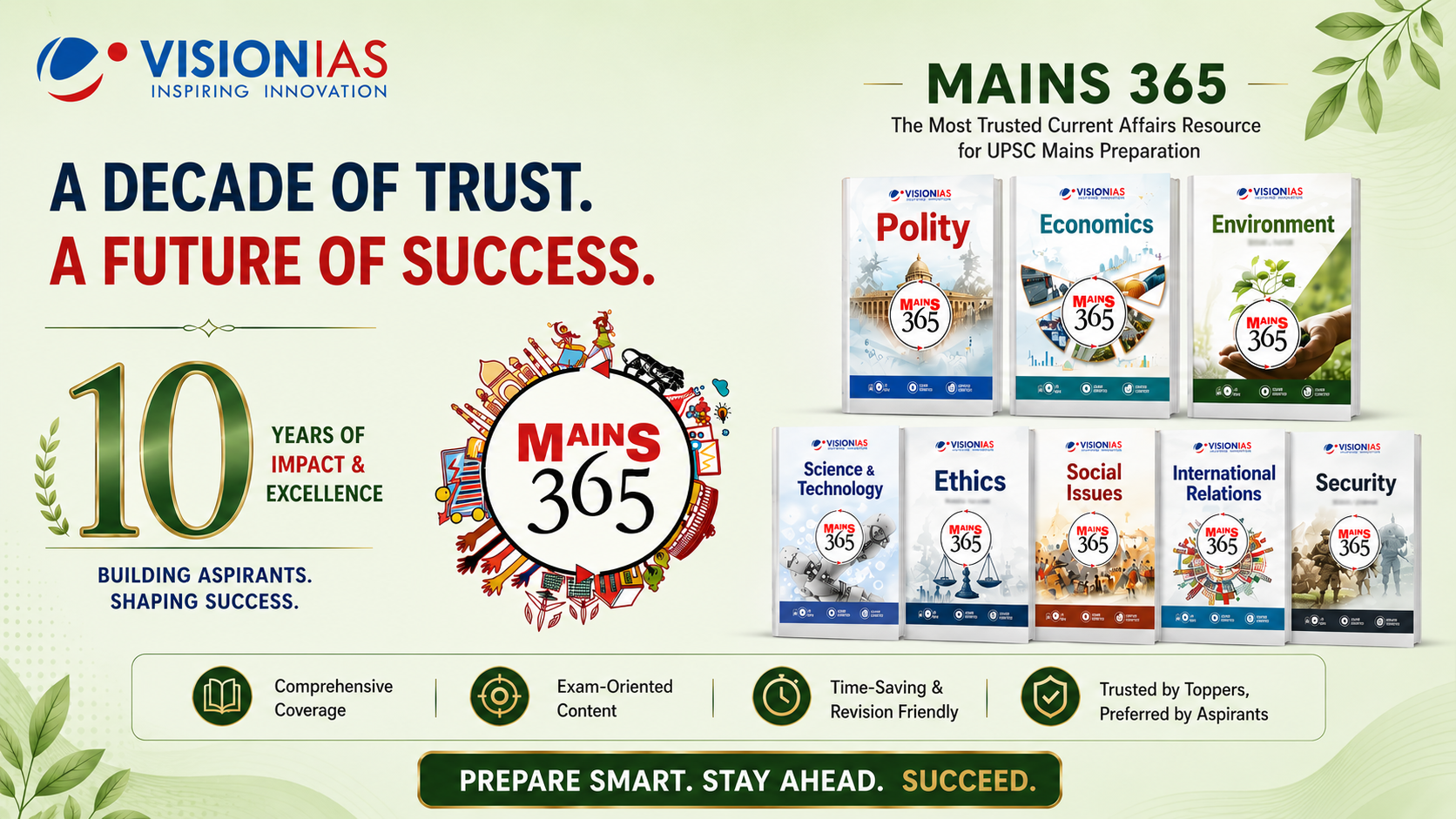








A decade ago, VisionIAS, India’s most forward-thinking UPSC preparation institution, launched Mains 365, a thoughtfully constructed and perpetually updated study resource designed to bridge the growing distance between fast-moving current affairs and the demanding, multi-layered requirements of the UPSC Civil Services Mains examination.
As we joyfully mark 10 years of VisionIAS Mains 365, this article explores what makes this celebrated resource so essential for GS Mains preparation, how its intuitive structure has worked for toppers, and why it continues to be the most trusted current-affairs-to-syllabus bridge in UPSC preparation today.
For aspirants looking for a focused and reliable approach to UPSC Mains 2026 preparation, Mains 365 UPSC 2026 continues to serve as a comprehensive current affairs resource that converts one year of important developments into exam-oriented learning.
From providing structured UPSC current affairs for Mains 2026 to offering concise and analytical UPSC Mains relevant information, it helps aspirants move beyond information gathering towards answer-ready preparation.
10 Years of VisionIAS Mains 365: Legacy Built on Consistent Relevance
The journey of VisionIAS Mains 365 over the past decade closely mirrors the changing nature of the UPSC examination itself, a journey shaped by relentless updating, academic rigour, and a genuine commitment to serving the aspirant’s preparation needs with honesty and purpose.
Steady and Precise Alignment with Evolving UPSC Trends
UPSC Mains questions have increasingly demanded current-affairs integration, and VisionIAS Mains 365 has consistently anticipated this demand ensuring aspirants are equipped with the right knowledge, relevant examples, and clear analytical frameworks to produce well-grounded, perceptive answers that examiners notice and reward.
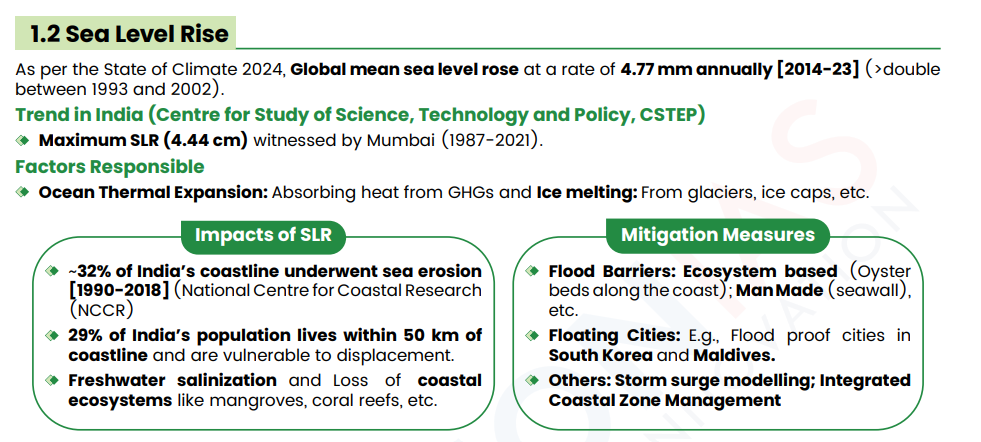
Significant and exam-relevant questions such as the inquiry into how climate change and sea-level rise are threatening the fragile existence of island nations find their most thorough and well-contextualised answers in the rigorously prepared Mains 365: Environment- Sea Level Rise & SIDS module, which gives aspirants a nuanced and syllabus-mapped understanding of one of the most consequential environmental challenges of our time.
VisionIAS Mains 365 Reflections Across The Years
The table below shows paper-wise Mains 365 and VisionIAS resource reflections in UPSC CSE Mains across three examination years.
| Year | GS 1 | GS 2 | GS 3 | GS 4 | Total |
| 2023 | 5 | 17 | 18 | 7 | 47 |
| 2024 | 12 | 14 | 19 | 12 | 57 |
| 2025 | 10 | 14 | 19 | 12 | 55 |
Mains 2024 and 2025 in Practice: How VisionIAS Mains 365 Addressed the Questions across GS Papers
Numbers tell one part of the story. The more useful question for any aspirant is: how does Mains 365 help answer a question in the examination hall? The table below takes five questions from the 2024 UPSC CSE Mains paper and shows the specific VisionIAS resources that cover them and, crucially, what each resource actually contributes to the answer.
Some Instances of Reflections from GS Paper 1
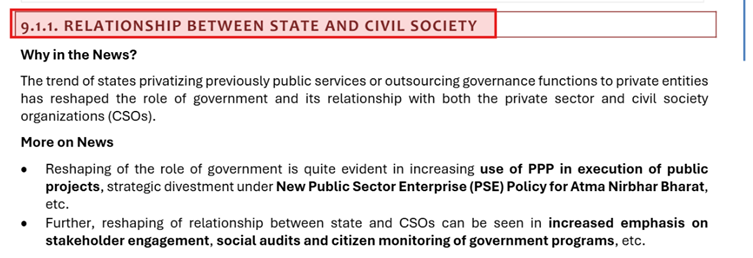
| Q.10: “In dealing with socio-economic issues of development, what kind of collaboration between government, NGOs, and the private sector would be most productive?” (UPSC-2024) |
Refer to the Vision IAS Mains 365 article on “Relationship between State and Social Society (New Public Governance)” to discuss the merits of various collaborative models.
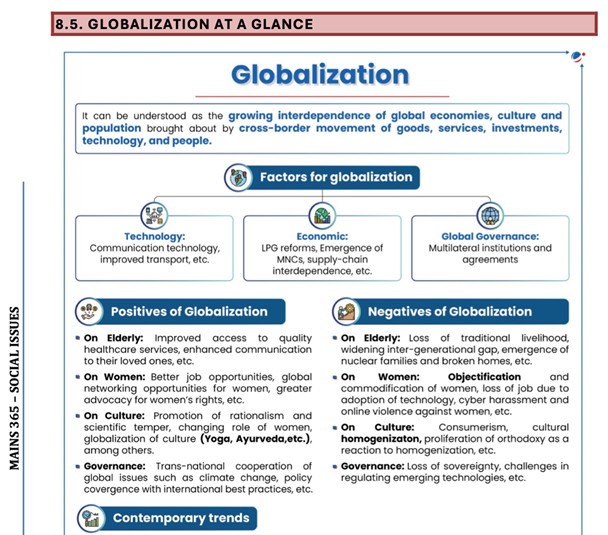
| Q. Globalization has increased urban migration by skilled, young, unmarried women from various classes. How has this trend impacted upon their personal freedom and relationship with family? (UPSC-2024) |
The impact of globalization on urban migration, particularly among skilled, young, unmarried women, is detailed in articles from Mains 365 on Family Structure and Globalization.
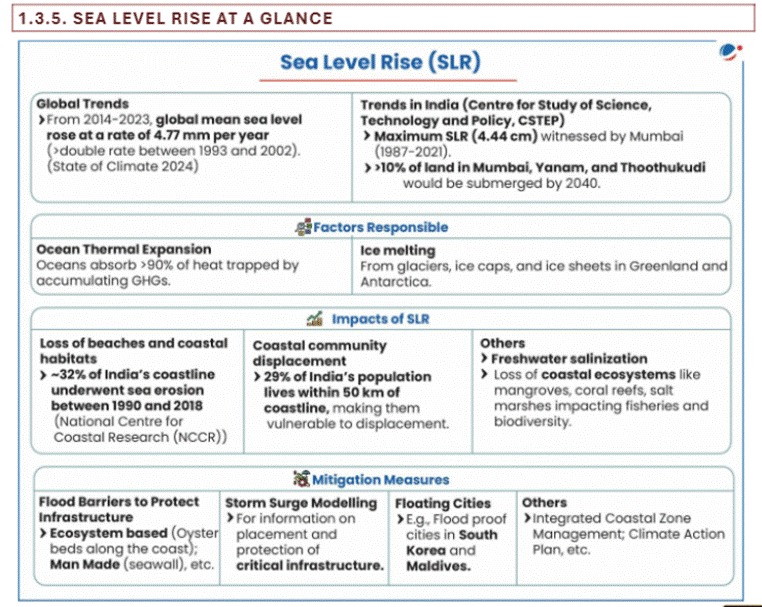
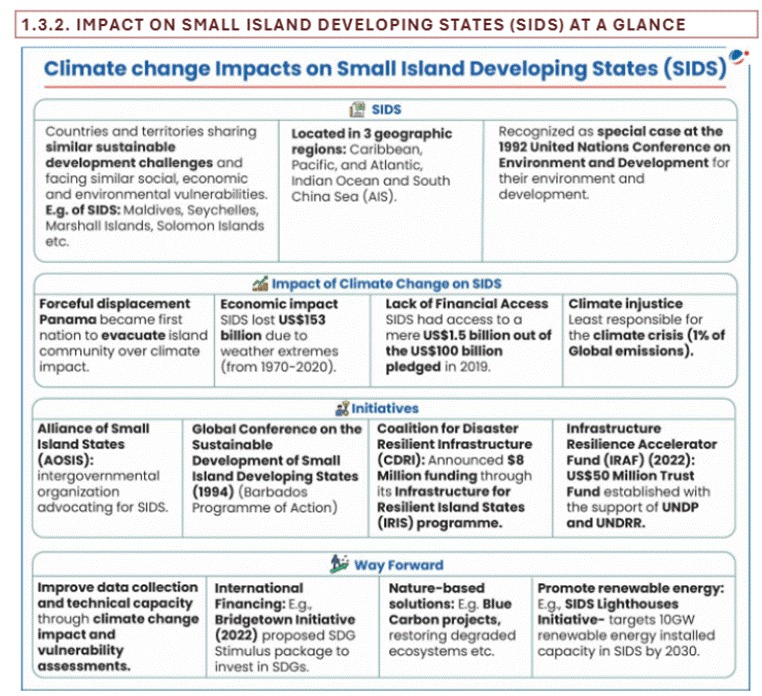
| Q. How are climate change and the sea level rise affecting the very existence of many island nations? Discuss with examples. (UPSC-2025) |
This question can be addressed using multiple VisionIAS resources: Mains 365: Environment – Sea Level Rise at a Glance provides scientific data on global sea level trends, Mains 365: Environment – Impact on Small Island Developing States (SIDS) at a Glance offers analysis of vulnerability assessments, and Monthly Current Affairs June 2024 – Small Island Developing States (SIDS) and Climate Change presents recent international conferences and policy developments.
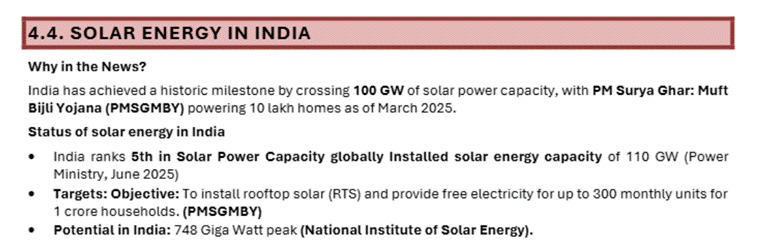
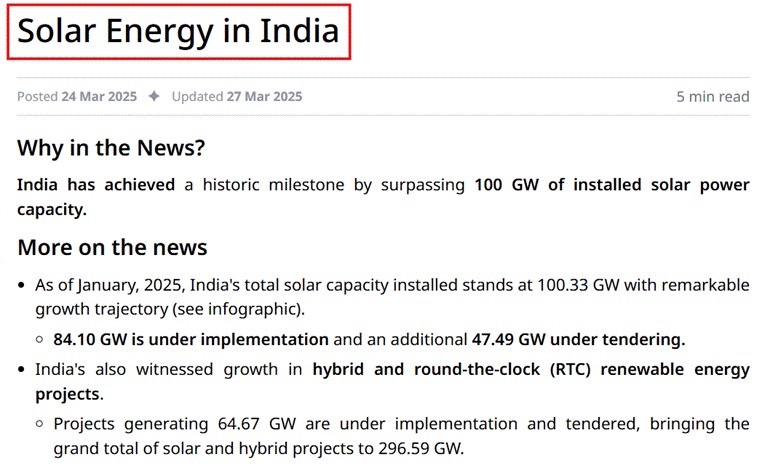
| Q. Explain briefly the ecological and economic benefits of solar energy generation in India with suitable examples. (UPSC- 2025) |
This question demands integration of geographical knowledge about India’s solar potential with current policy developments. Candidates can draw information from Mains 365: Environment – Solar Energy in India and Monthly Current Affairs February 2025 – Solar Energy in India. This integration allows candidates to discuss recent solar park installations, grid integration challenges, and economic impact assessments.
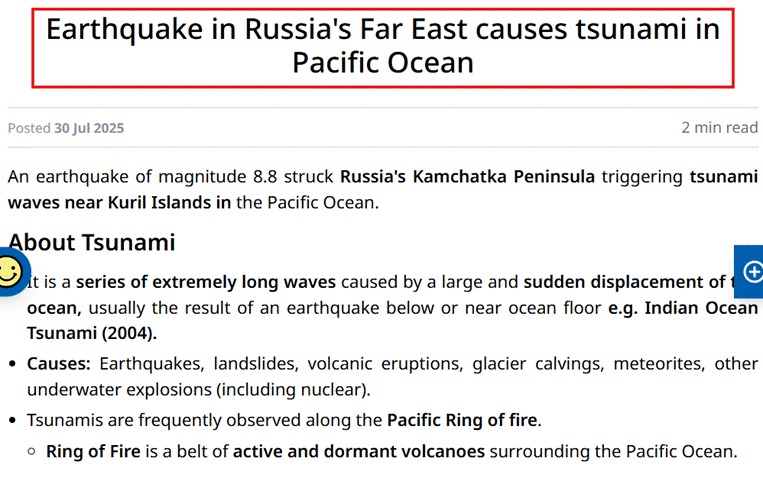
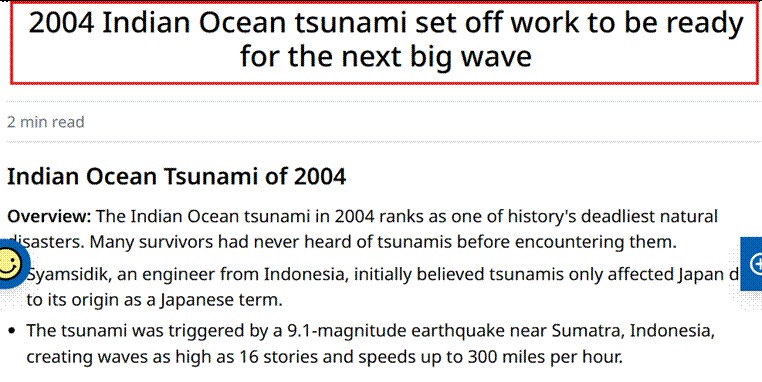
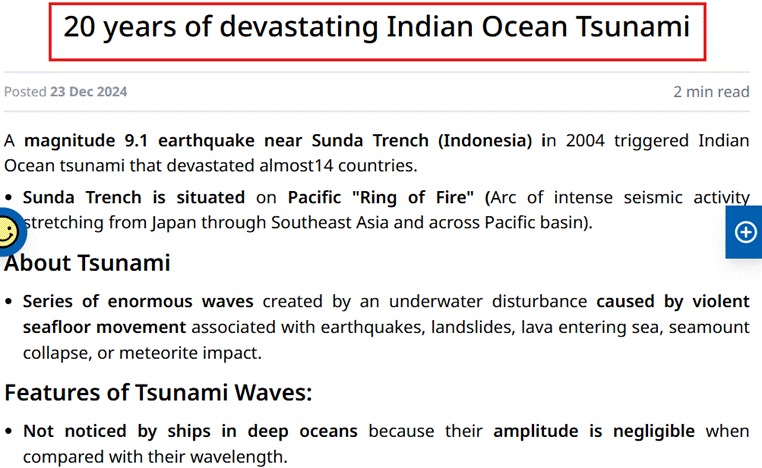
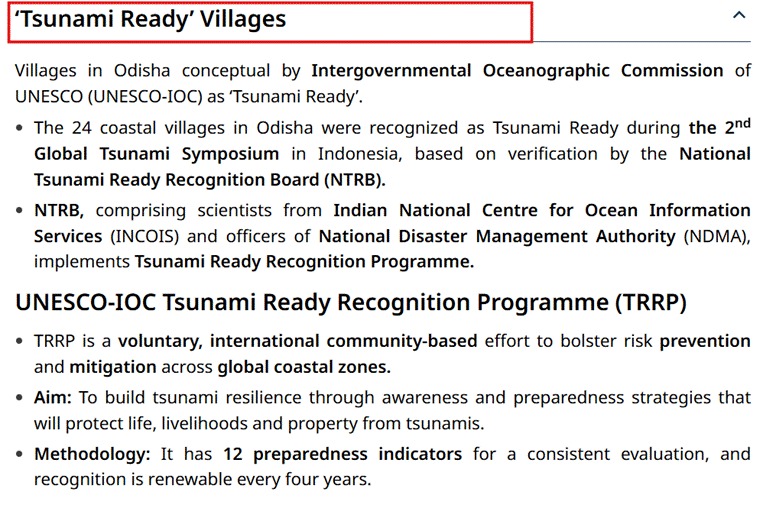
| Q. What are Tsunamis? How and where are they formed? What are their Consequences? Explain with examples. (UPSC-2025) |
This question demonstrates integration opportunities using multiple current affairs resources: Mains 365 Updated Classroom Study Material – Tsunami provides theoretical foundation, while recent News Today coverage includes 30 Jul 2025 – Earthquake in Russia’s Far East causes tsunami in Pacific Ocean, 17 Dec 2024 – ‘Tsunami Ready’ Villages, 23 Dec 2024 – 20 years of devastating Indian Ocean Tsunami, and Daily News Summary (27 Dec 2024) – 2004 Indian Ocean tsunami set off work to be ready for the next big wave.
Some Instances of Reflections from GS Paper II
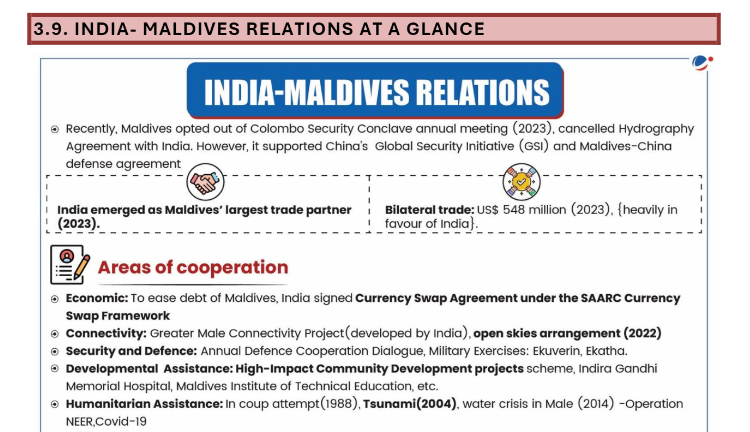
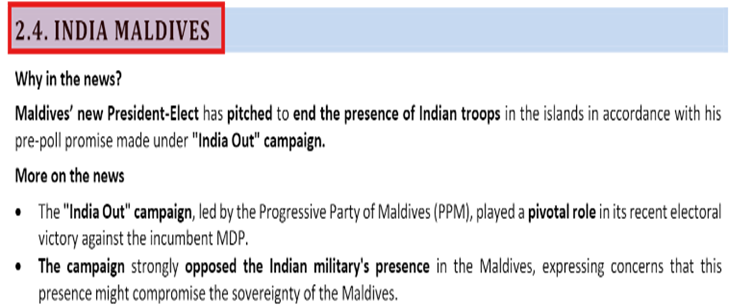
| Q. Discuss the geopolitical and geostrategic importance of Maldives for India with a focus on global trade and energy flows. Further also discuss how this relationship affects India’s maritime security and regional stability amidst international competition. (UPSC-2024) |
For a thorough understanding of India-Maldives relations, refer to the Mains 365: International Relations section on India-Maldives relations. For recent developments, consult the Monthly Magazine article on India-Maldives and the News Today updates on the Indian External Affairs Minister’s visit to Maldives and Maldives signing a military pact with China.
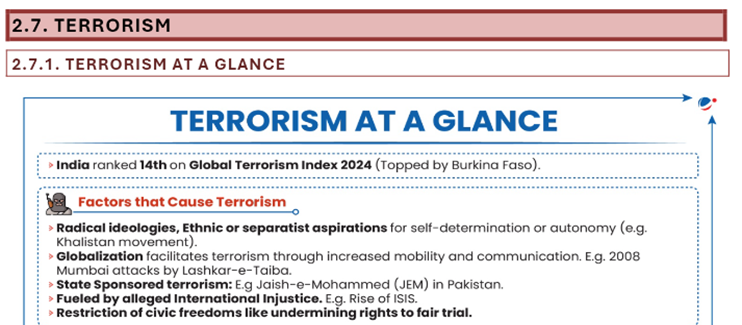
| Q. ‘Terrorism has become a significant threat to global peace and security.’ Evaluate the effectiveness of the United Nations Security Council’s Counter-Terrorism Committee (CTC) and its associated bodies in addressing and mitigating this threat at the international level. (UPSC-2024) |
The VisionIAS Mains 365 resources on Terrorism at a Glance and UN Conventions Against Transnational Organised Crime can equip you with the necessary knowledge to analyse the performance of these international institutions.
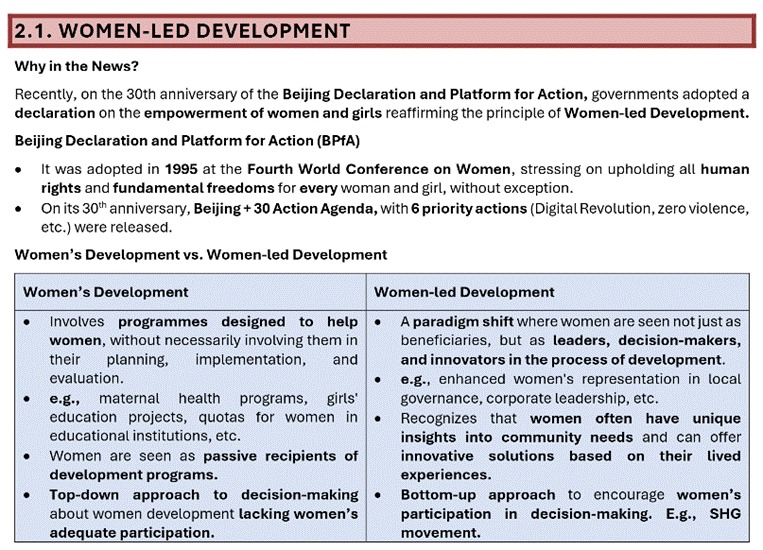
| Q. Women’s social capital complements in advancing empowerment and gender equity. Explain. (UPSC-2025) |
This question can be addressed using Mains 365: Social Issues – Women Led Development. This resource provides analysis of social capital theory, women’s empowerment mechanisms, and contemporary policy frameworks connecting social networks with gender equity outcomes.
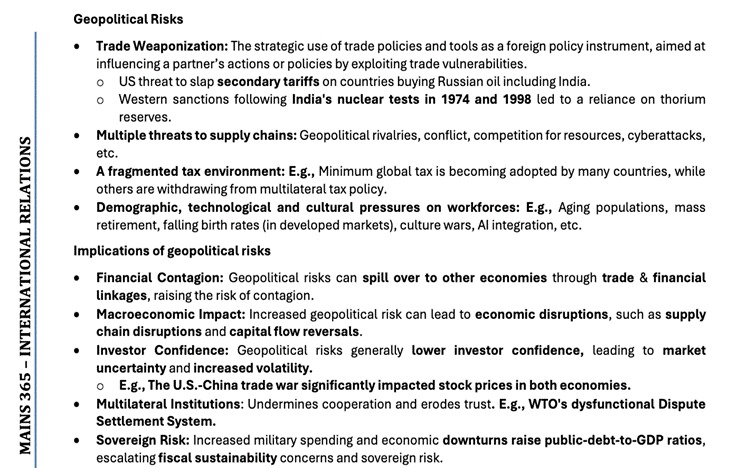
| Q. “With the waning of globalization, the post-Cold War world is becoming a site of sovereign nationalism.” Elucidate. (UPSC-2025) |
This question can be addressed using Mains 365: International Relations – Geopolitical Risk to Global Economy. This resource examines contemporary geopolitical trends, economic nationalism patterns, and changes in global governance structures following traditional globalization models.

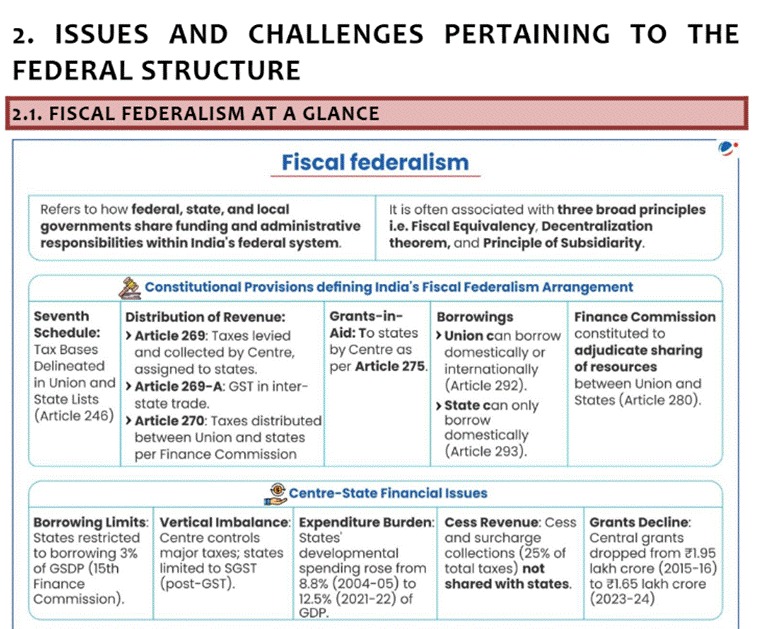
| Q. Examine the evolving pattern of Centre-State financial relations in the context of planned development in India. How far have the recent reforms impacted the fiscal federalism in India? (UPSC-2025) |
This question can be addressed using Mains 365: Polity – Fiscal Federalism at a glance. Mains365 examines financial devolution patterns, GST impact on center-state relations, and contemporary fiscal transfer mechanisms.
Some Instances of reflections from GS Paper III
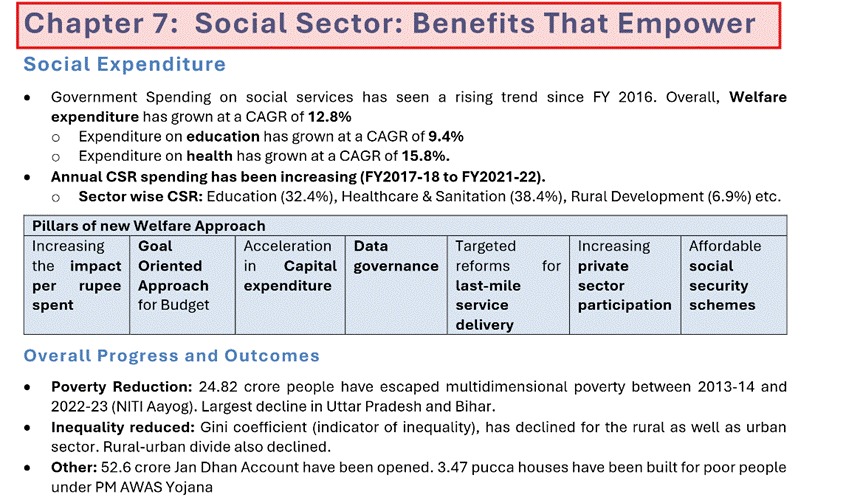
| Q. Examine the pattern and trend of public expenditure on social services in the post-reforms period in India. To what extent this has been in consonance with achieving the objective of inclusive growth? (UPSC-2024) |
This question draws from recent developments related to inclusive growth, as covered in the VisionIAS Main365 and the explanation related to the Economic Survey- Chapter 7 focusing on the Social Sector.
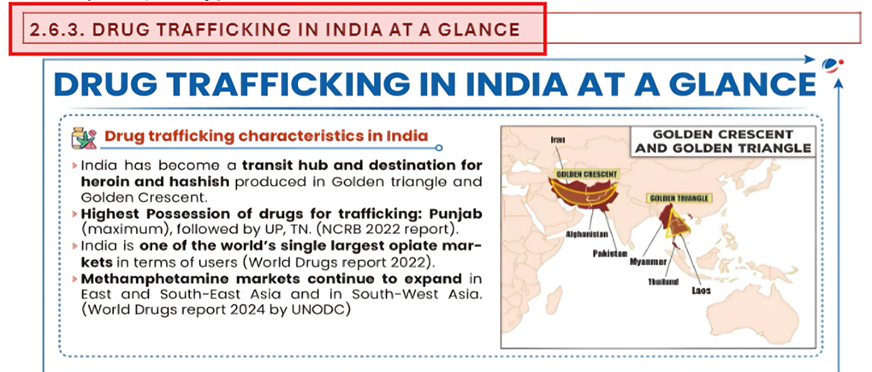
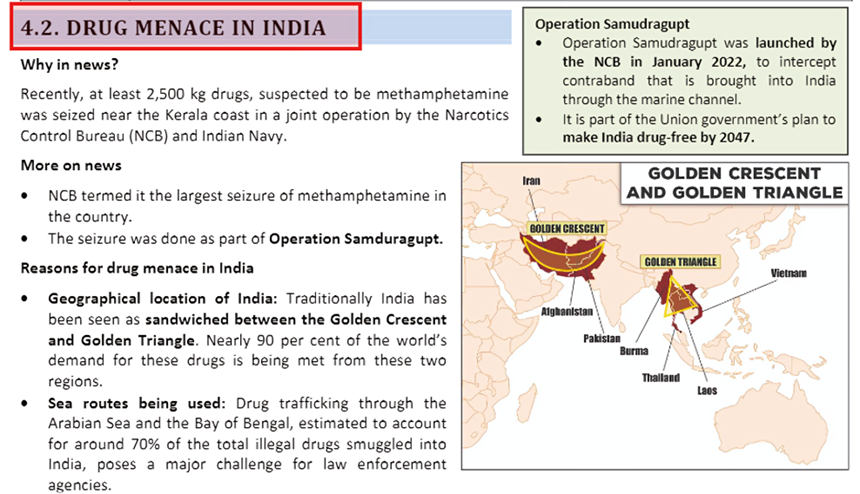
| Q. Explain how narco-terrorism has emerged as a serious threat across the country. Suggest suitable measures to counter narco-terrorism. (UPSC-2024) |
This question can be addressed using information from the Mains 365 Security section on Drug Trafficking in India at a Glance, Monthly Magazine article on Drug Menace in India and News Today on Narco-Coordination Centre (NCORD) meeting.
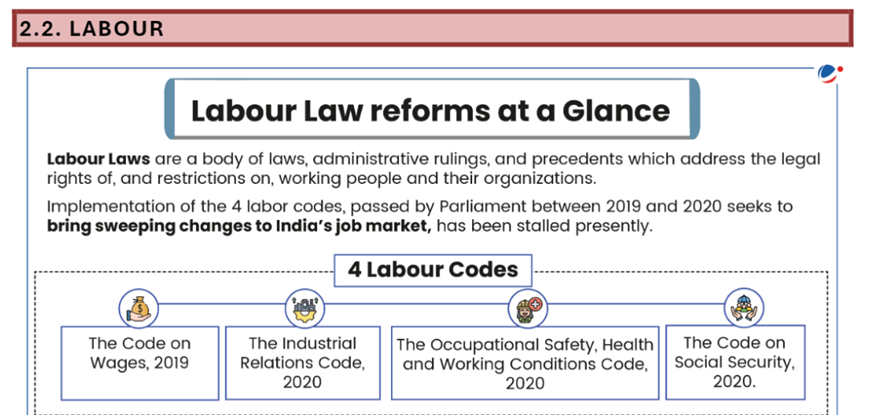
| Q. Discuss the merits and demerits of the four Labour Codes in the context of labour market reforms in India. What has been the progress so far in this regard? (UPSC-2024) |
Refer to the Mains 365 Economy section on Labour for a comprehensive understanding of the labour codes and recent developments.
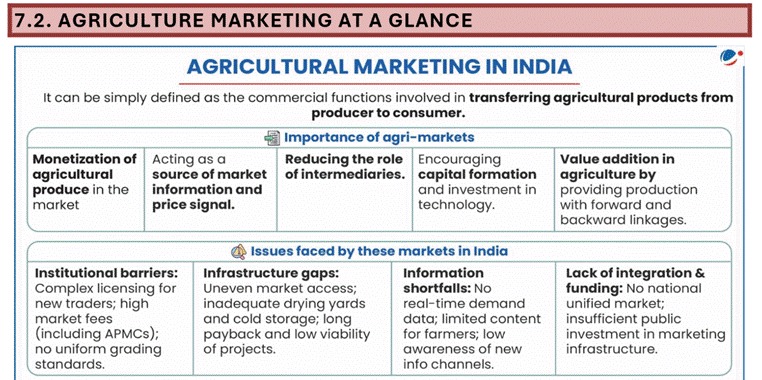
| Q. Elaborate the scope and significance of supply chain management of agricultural commodities in India. (UPSC-2025) |
This question can be addressed using Mains 365: Economy – AGRICULTURE MARKETING AT A GLANCE. This resource provides analysis of agricultural value chains, logistics infrastructure, market integration mechanisms, and post-harvest management systems affecting commodity supply chain efficiency.
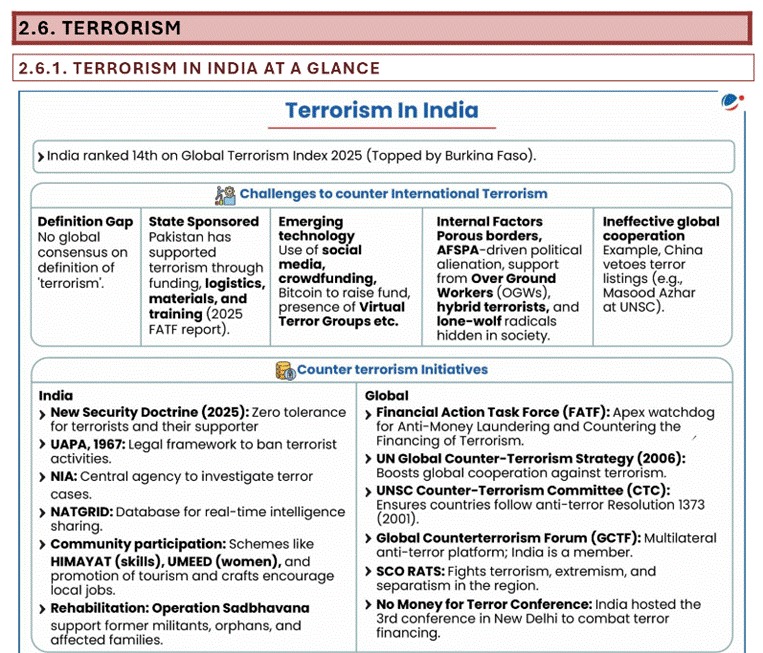
| Q. Terrorism is a global scourge. How has it manifested in India? Elaborate with contemporary examples. What are the counter measures adopted by the State? Explain. (UPSC-2025) |
This question can be addressed using Mains 365: Security – TERRORISM IN INDIA AT A GLANCE. Main 365 provides analysis of terrorism patterns, contemporary security challenges, and institutional counter-terrorism mechanisms.
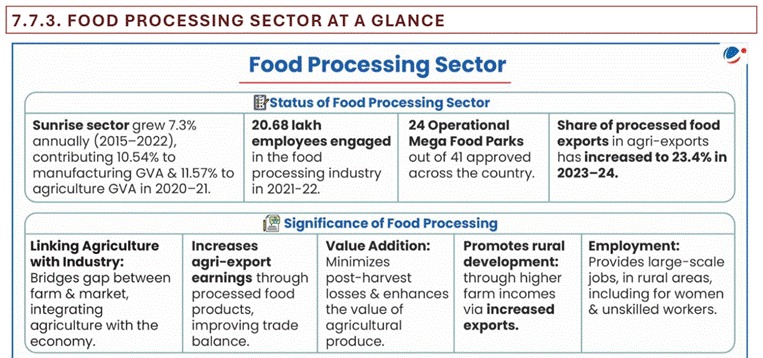
| Q. Examine the scope of the food-processing industries in India. Elaborate the measures taken by the government in the food processing industries for generating employment opportunities. (UPSC-2025) |
This question can be addressed using Mains 365: Economy – FOOD PROCESSING SECTOR AT A GLANCE. Main 365 provides analysis of sectoral potential, employment generation strategies, and policy support mechanisms.
Some Instances of Reflections from GS Paper IV (Ethics)
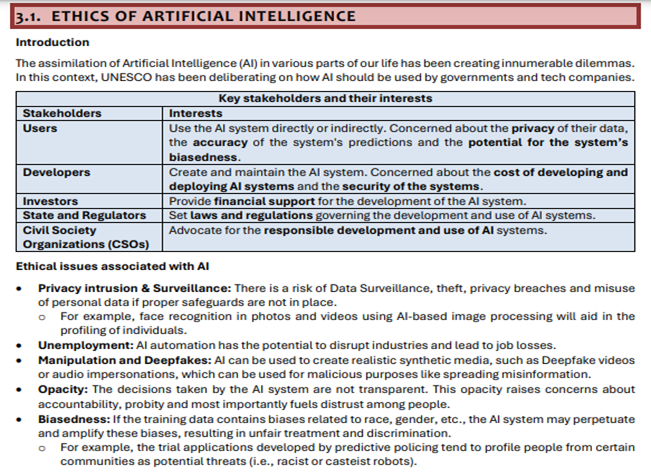
| Question 1(a): The application of Artificial Intelligence as a dependable source of input for administrative rational decision-making is a debatable issue. Critically examine the statement from an ethical point of view. (UPSC-2024) |
This question directly relates to recent developments in AI and its application in governance. The Mains365 Ethics document covers “Ethics and Artificial Intelligence,” providing a foundation for understanding the ethical considerations surrounding AI in administration.
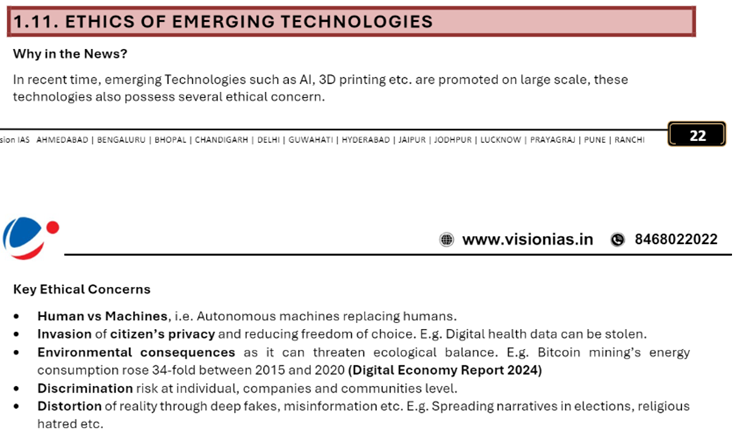
| Question 7 presents a scenario involving a technology company’s environmental impact and AI development. (UPSC-2024) |
Mains365 helps by providing coverage of the ethics of emerging technologies in the Mains365 Ethics document. This knowledge allows you to analyse the ethical dilemmas more effectively, grounding your response in real-world contexts and recent developments.
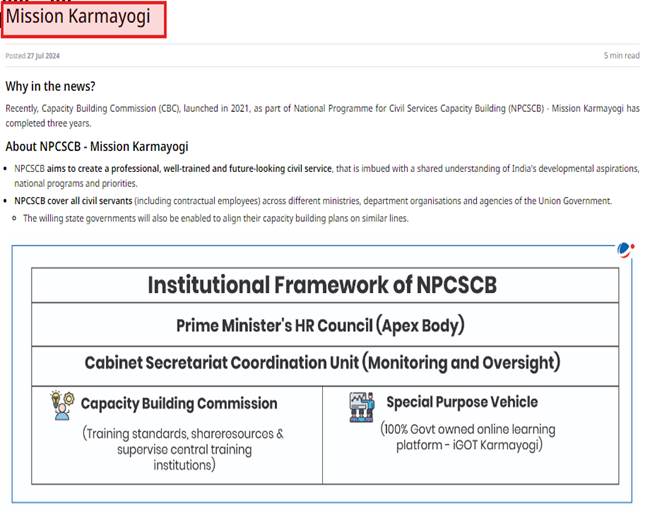
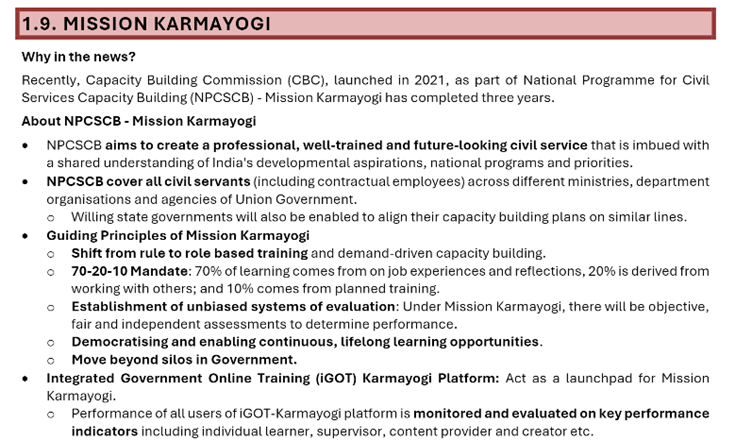
| Question 6(b): “Mission Karmayogi is aiming for maintaining a very high standard of conduct and behaviour to ensure efficiency for serving citizens and in turn developing oneself. How will this scheme empower the civil servants in enhancing productive efficiency and delivering the services at the grassroots level?” (UPSC-2024) |
Refer to the updated Mains365 document and the Monthly Magazine for June 2024 on Mission Karmayogi. This allows you to discuss the ethical dimensions of civil service reforms in the context of recent government initiatives aimed at improving public service delivery.
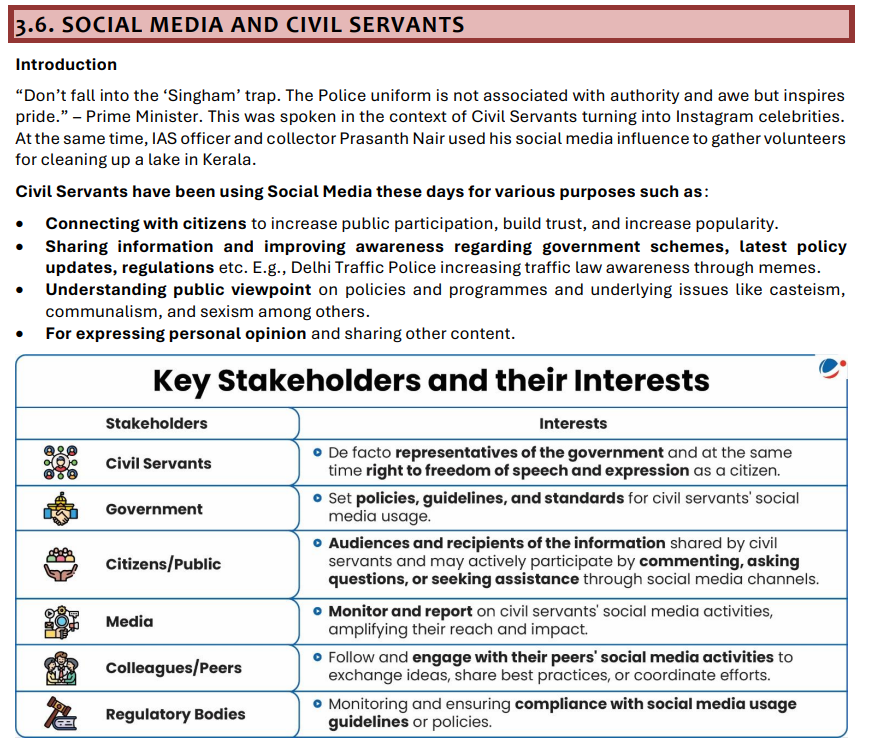
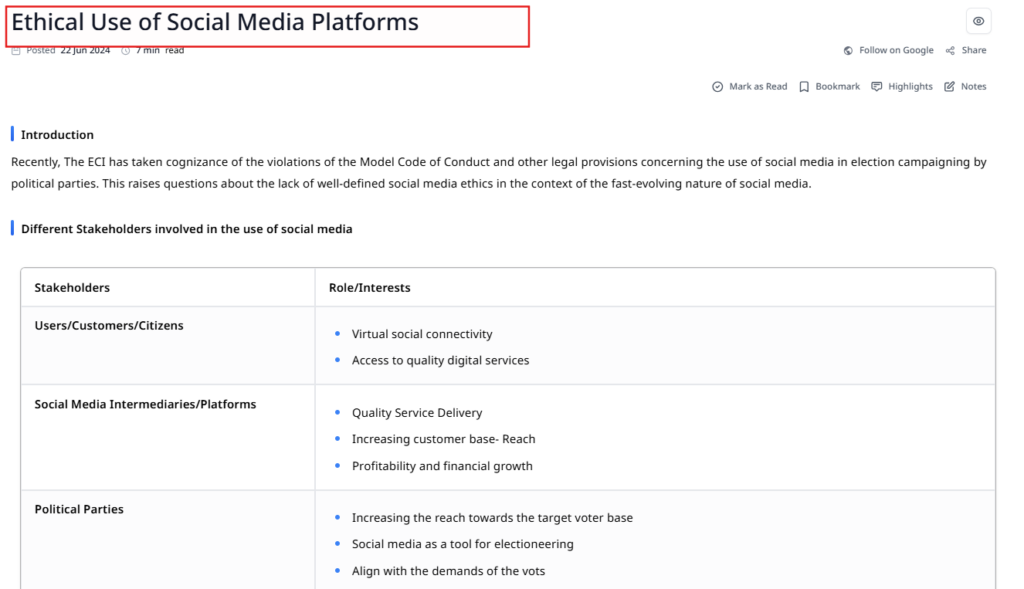
| Q1 (a). In the present digital age, social media has revolutionised our way of communication and interaction. However, it has raised several ethical issues and challenges. Describe the key ethical dilemmas in this regard. (UPSC-2025) |
Mains 365: Ethics and the Monthly Current Affairs article on Ethical Use of Social Media Platforms help address this question by covering issues such as misinformation, privacy, hate speech, online abuse, digital addiction, algorithmic bias, and responsible online conduct. The section on Social Media and Civil Servants also helps connect these dilemmas with accountability, neutrality, and public trust in administration.
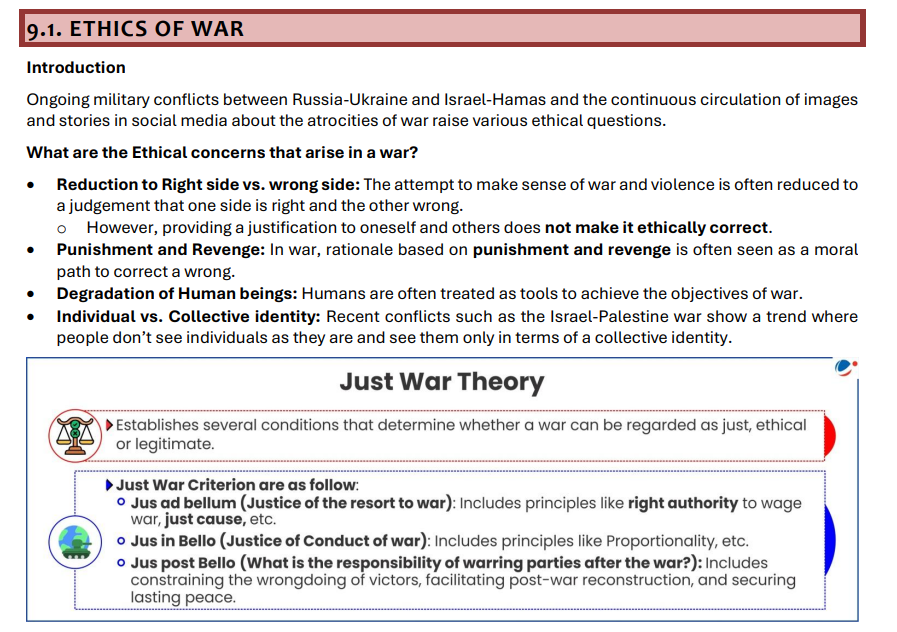
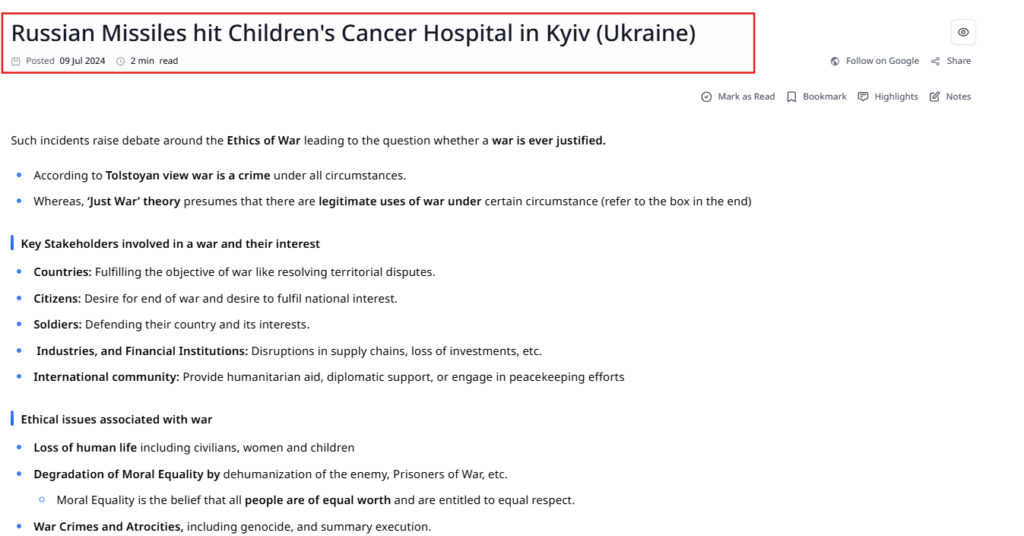
| Q2 (a). Carl von Clausewitz once said, “War is diplomacy by other means.” Critically examine the above statement in the present context of contemporary geo-political conflict. (UPSC-2025) |
Mains 365: Ethics of War provides a framework to critically examine Clausewitz’s statement through just war theory, proportionality, necessity, civilian protection, and humanitarian concerns. The News Today example on the Russia-Ukraine conflict helps add contemporary relevance by showing how modern warfare raises serious ethical questions about civilian harm and limits of military action.
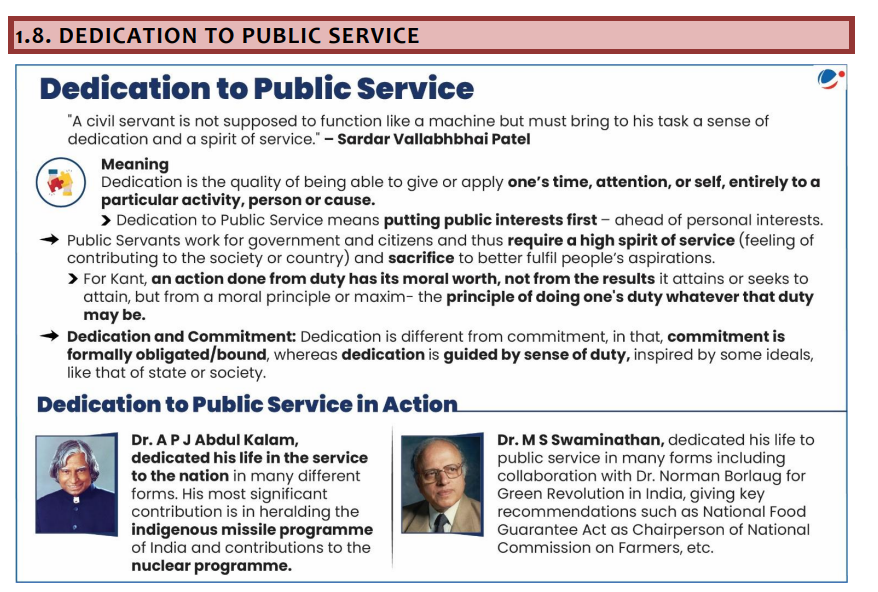
| Q5 (a) “One who is devoted to one’s duty attains highest perfection in life.” Analyse this statement with reference to a sense of responsibility and personal fulfilment as a civil servant. (UPSC-2025) |
Mains 365: Dedication to Public Service helps explain how devotion to duty strengthens responsibility, integrity, perseverance, and citizen-centric governance. It also supports analysis of how civil servants can find personal fulfillment through public service, ethical commitment, and contribution to collective welfare.
What Makes Mains 365 Work: Three-Component System
The consistent reflection data across 2023, 2024, and 2025 is not coincidental. It is the product of a deliberate three-component structure that delivers 360 degree preparation for UPSC Mains Examination.
Subject Booklets- Depth for Each Paper
The seven subject booklets are the core of the programme. Each is organised by syllabus topic, not by date which means an aspirant studying the Environment booklet finds sea level rise, solar energy, tsunamis, and geospatial technology each covered as a self-contained section with cause-effect frameworks, data, policy responses, and current examples.
Summary Documents- Cross-Subject Connections
Summary Documents serve a different function. Where the booklets go deep on individual topics, the Summary Documents give aspirants a cross-subject mental map. A candidate preparing for the Essay paper, or for multi-dimensional GS questions that cut across Economy and Environment, or Polity and Social Issues, uses the Summary Documents to see how themes connect.
The Polity and Governance summary covers key judicial judgments, policy updates, debates on simultaneous elections and the Uniform Civil Code, and frameworks for Centre-State relations organised so that linkages across topics are visible at a glance.
Quick Facts Documents- Last-Mile Recall
Quick Facts are built for the final days before the examination. They contain one-liners, key data points, report names, committee recommendations, and keywords that can be dropped into an answer to add credibility and specificity. Rather than re-reading entire booklets in the last week, aspirants use Quick Facts to reinforce the points most likely to distinguish a good answer from an average one.
How Mains 365 Strengthens GS Mains Answer Writing
The greatest challenge in UPSC Mains is not acquiring factual knowledge but articulating that knowledge meaningfully, analytically, and within the precise context of the syllabus. Success depends on presenting well-structured, multidimensional answers that demonstrate clarity, depth, and understanding. This is where Mains 365 makes its most significant contribution.
Unlike conventional current affairs compilations, every article in Mains 365 is designed in an answer-writing format. Topics are systematically structured around dimensions such as context, significance, challenges, implications, and way forward, helping aspirants understand not only what to study but also how to present it in the examination. As a result, aspirants are continuously exposed to the framework and analytical approach expected in GS Mains answers.
Through consistent engagement with Mains 365, aspirants gradually develop the ability to think in syllabus-linked themes and answer frameworks. This habit of organising information into exam-ready arguments, supported by relevant examples, data, and policy perspectives, becomes a crucial differentiator in the highly competitive GS Mains examination.
Conclusion
Ten years of Mains 365 reflect VisionIAS’s sustained commitment to helping aspirants approach UPSC Mains preparation in a more structured, focused, and effective manner. Over the years, it has evolved into a comprehensive resource that connects current affairs with the analytical depth, multidimensional thinking, and answer-writing approach required in the examination.
From understanding the science behind tectonic activity and tsunamis to analysing issues such as tribal displacement, urban poverty, technological change, public health, and globalisation, Mains 365 has consistently covered the themes that shape the UPSC discourse. More importantly, it has done so in a manner that helps aspirants transform information into well-structured, exam-ready answers.
As the nature of the examination continues to evolve, Mains 365 will continue to adapt to emerging issues, changing question patterns, and the growing demands of GS Mains preparation. For aspirants seeking a reliable bridge between current affairs and answer writing, it remains one of the most trusted resources in the UPSC ecosystem.
With the Mains 365 PDF 2026 set to release from 15th June, aspirants can integrate it into their UPSC Mains smart study plan and build the depth, interlinkages and issue-based understanding increasingly rewarded by the UPSC examination.
FAQs on VisionIAS Mains 365
1. When will VisionIAS Mains 365 2026 be released?
VisionIAS Mains 365 PDF 2026 is scheduled to be released from 15th June 2026.
2. Is Mains 365 enough for UPSC Mains current affairs preparation?
Mains 365 covers major current affairs in an exam-oriented format, making it the most comprehensive resource for Mains revision.
3. How should I use Mains 365 for answer writing?
Focus on issue-wise analysis, examples, data, and way-forward sections to enrich GS and Essay answers.
4. Does UPSC ask questions from Mains 365?
Many UPSC Mains questions reflect themes, issues, examples, and analytical frameworks covered in Mains 365.
5. What makes Mains 365 different from monthly current affairs magazines?
Mains 365 consolidates one year of current affairs into syllabus-linked, answer-ready content with multidimensional analysis