As India celebrates National Startup Day on 16 January 2026, the nation marks a decade since the launch of the Startup India initiative.
As India celebrates National Startup Day on 16 January 2026, the nation marks a significant milestone, a decade since the launch of the transformative Startup India initiative. The Startup India Initiative is a flagship government programme launched to promote entrepreneurship and innovation by providing policy support, funding access, and an enabling regulatory environment for startups.
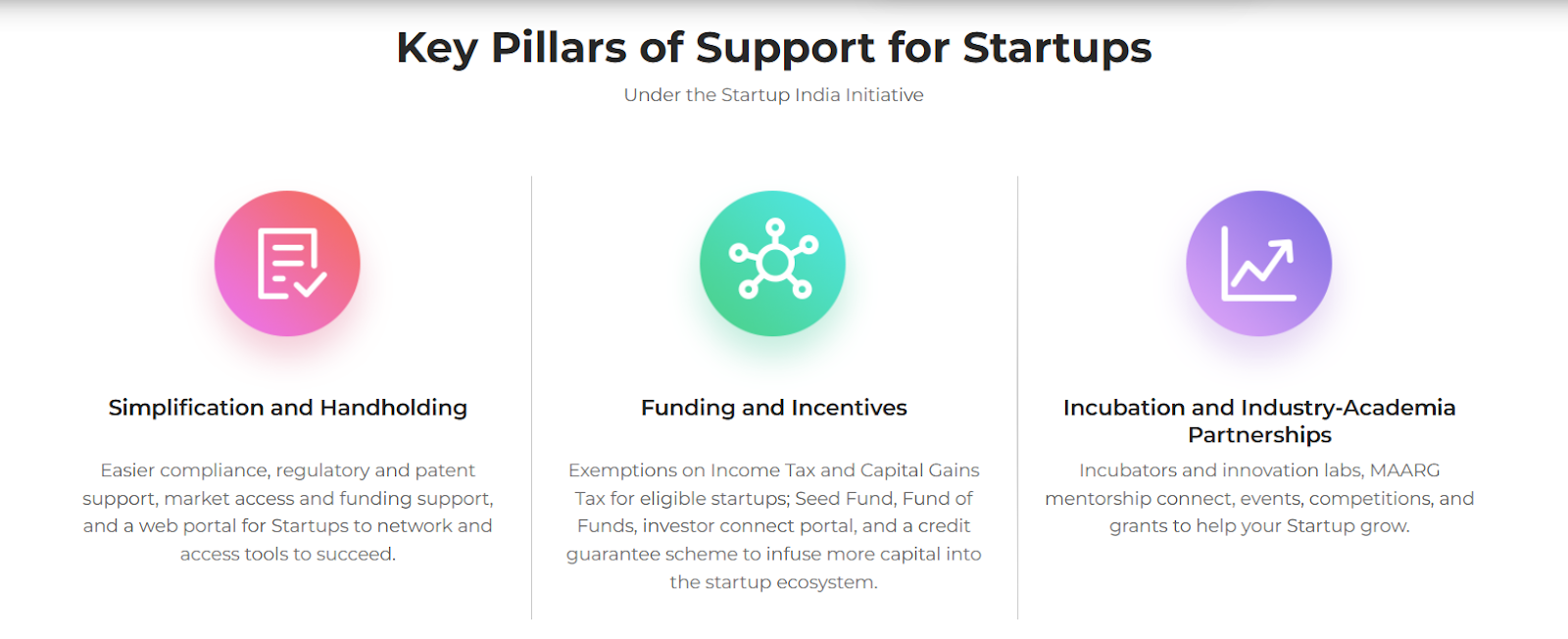
The initiative, spearheaded by the Department for Promotion of Industry and Internal Trade (DPIIT), introduced policy measures designed to simplify regulations, catalyse funding, and foster innovation.
The number of DPIIT-recognised startups has grown from a few hundred in 2016 to over 2.09 lakh by December 2025. This growth represents millions of dreams realised, innovations brought to life, and entrepreneurial aspirations fulfilled across the nation.
Democratising Entrepreneurship Across Bharat
One of the achievements of the Startup India initiative has been the democratisation of entrepreneurship beyond metro hubs. Today, around 50% of recognised startups originate from Tier-II and Tier-III cities, changing the geographical distribution of innovation in India.
Cities like Jaipur, Indore, Kochi, Bhubaneswar, and Lucknow have emerged as startup hubs. This shift has been driven by improved digital connectivity, lower operational costs, and state-level policies that encourage local entrepreneur development.
The success of Startup India rests on a foundation of over 62 regulatory reforms that dismantled bureaucratic barriers. These reforms addressed friction points across the entrepreneurial lifecycle, from incorporation to exit.
Key interventions include the self-certification regime that allows startups to self-certify compliance under nine labour laws and three environmental laws for up to five years, reducing the inspection burden. The relaxation of public procurement norms enabled startups to participate in government tenders through the Government e-Marketplace (GeM), opening access to a market dominated by established players.
The 2024 withdrawal of the Angel Tax addressed previous challenges where investments were treated as income, a move intended to support local funding and capital formation. Its removal harmonised India's investment landscape with global norms and unleashed domestic funding activity.
Funding Ecosystem: Building Financial Infrastructure
Recognising that access to capital is the lifeblood of innovation, the government introduced funding instruments that have catalysed over ₹27,000 crore in investments through various initiatives.
The Fund of Funds for Startups (FFS), launched with a corpus of ₹10,000 crore and managed by SIDBI, operates as a catalyst rather than a direct investor. By contributing to SEBI-registered Alternative Investment Funds, it has leveraged over ₹25,500 crore into 1,370+ startups, demonstrating a multiplier effect of 2.5 times.
The Startup India Seed Fund Scheme (SISFS), launched in 2021 with an outlay of ₹945 crore, targets the earliest and riskiest stage of a startup's journey. By disbursing funds through 215+ approved incubators, it has provided proof-of-concept and prototyping support to thousands of ventures.
Despite the global funding winter of 2023-2024, India's startup ecosystem demonstrated resilience. By 2025, the market stabilised with improved fundamentals, as early-stage funding rose by 7% to $3.9 billion, reflecting continued investor confidence in India's innovation potential.
Unicorn Phenomenon and Job Creation
The past decade has witnessed the rise of India's unicorn companies, startups valued at over $1 billion. From just four unicorns in 2014, India now boasts 120-125 active unicorns with a combined valuation exceeding $350 billion. These companies span diverse sectors including fintech, edtech, healthtech, logistics, and e-commerce, demonstrating the breadth of Indian innovation.
Beyond valuations, startups have emerged as engines of employment generation. By the end of 2025, recognised startups had created over 21 lakh jobs. Economic studies suggest that for every direct job created in the startup sector, three to five indirect jobs emerge in the gig economy and support services, implying a total employment impact exceeding six million jobs over the decade.
Inclusive Growth: Women and MSME Empowerment
National Startup Day also celebrates the progress toward inclusive entrepreneurship. Over 75,000 recognised startups feature at least one woman director, representing more than 45% of the total recognised base. While a funding gap persists, with women-led startups securing $1 billion in 2024 (8.76% of total funding), India ranks third globally in funding raised by women-led startups.
The initiative has strengthened the MSMEs ecosystem by providing smaller enterprises with access to capital, technology, and markets. The integration of startups with traditional MSMEs has created a cycle of innovation, where established businesses benefit from technological solutions while startups gain distribution and domain expertise.
The first half of the decade was dominated by consumer focused-startups and e-commerce. The second half has witnessed a pivot toward deep technology sectors aligned with national priorities.
India's spacetech sector has grown from a handful of players to over 200 startups, with the private space economy projected to reach $13 billion by 2025. The opening up of the space sector and the establishment of IN-SPACe opened ISRO's facilities to private players, enabling companies like Skyroot Aerospace and Agnikul Cosmos to develop indigenous launch vehicles.
The fintech sector, built on the foundation of India Stack (Aadhaar, UPI, DigiLocker), has become a case study in financial inclusion. India now hosts the third-largest fintech ecosystem globally, with giants like Razorpay and CRED revolutionising payments, lending, and wealth management.
The generative AI sector witnessed growth in 2025, with funding increasing 2.7 times in the first half of the year. Unlike earlier startups, companies are now building foundational models trained on Indian languages and datasets, positioning India as a leader in AI sovereignty.
Conclusion
The past decade of Startup India has altered India's entrepreneurial DNA. The initiative has dismantled the fear of failure, democratised access to capital, and transformed tier-2 cities into innovation hubs. As we celebrate National Startup Day and honour the entrepreneur who dared to dream, we recognise that this is just the beginning.
With policy support from DPIIT, continued focus on emerging technologies, and an ecosystem that now produces unicorn companies at an impressive pace, India is poised to lead the global innovation economy. The startups of today are not just building businesses but architecting India's technological sovereignty and shaping the nation's journey toward the goal of Viksit Bharat@2047.

Master Digital Age Governance & Technology Trends with VisionIAS Comprehensive Current Affairs →
National Startup Day 2026: FAQs
1. What is the primary goal of the Startup India initiative?
Ans. Strengthen Startup ecosystem and transform India from job seekers to job creators.
2. When was the Startup India Action Plan launched?
Ans. January 16, 2016.
3. What is the self-certification regime for startups?
Ans. Startups can self-certify compliance under labor and environmental laws for five years.
4. How has India Stack benefited the fintech sector?
Ans. It enabled financial inclusion through Aadhaar, UPI, and DigiLocker infrastructure.
5. What role does DPIIT play in Startup India?
Ans. It spearheads policy reforms and regulatory simplification for startups.