Every December 4, India observes Navy Day , honoring the Navy's contribution in Operation Trident that crippled Pakistan's fleet during the 1971 war.
Indian Navy Day, observed annually on December 4, honors the bravery, dedication, and sacrifices of naval personnel safeguarding India’s maritime security. The 2025 celebrations at Shangumugham Beach in Thiruvananthapuram were historic, symbolizing India’s growing maritime awareness and commitment to securing its seas.
This year’s theme, “Combat Ready, Cohesive, Credible, and Aatmanirbhar Force,” reflects the Navy’s evolution from a coastal defense force to a confident guardianship across the Indo-Pacific, while highlighting the commitment toward indigenisation through platforms like INS Vikrant and the Project 17A frigates.
Navy Day 2025 in Thiruvananthapuram: A Maritime Cultural Heritage and Operational Excellence
Hosting the celebrations in Kerala honored the State's rich maritime legacy, linked with the Chera and Chola empires and the legendary Kunjali Marakkars (16th-century naval chieftains who defended Indian shores against European powers). The event fostered enthusiastic public participation, strengthening maritime consciousness and the Navy-citizen bond.
The President of India's presence as Supreme Commander added immense national significance. The President lauded the Navy as both a "guardian of the seas" and "beacon of humanity," praising its roles in combat, humanitarian relief, evacuations, and protecting India's Blue Economy. The operational demonstration showcased technological sophistication and readiness. Warships, including INS Vikrant, displayed indigenous capabilities and sea control prowess.
Submarines reinforced underwater dominance, while MiG-29K fighters, P-8I aircraft, and MH-60R helicopters demonstrated multi-dimensional strike power. The MARCOS executed combat free fall and rapid insertion drills, reflecting preparedness against piracy and regional threats, signaling India's resolve to protect maritime sovereignty across the Indian Ocean Region.
Historical Legacy: Why December 4 Matters
Navy Day commemorates Operation Trident, the remarkable naval strike during the 1971 Indo-Pak War. On the night of December 4–5, Indian missile boats surprised Pakistan’s Western Fleet at Karachi, sinking PNS Khaibar and PNS Muhafiz, severely damaging PNS Shah Jahan, and destroying vital fuel depots.
The operation marked the first combat use of anti-ship missiles in the region and forced the Pakistan Navy to remain confined within its ports. This triumph showcased exceptional strategic planning and boldness, establishing December 4 as a day dedicated to honoring naval legacy and maritime supremacy.
The spirit of Operation Trident continues to inspire the Navy’s modern missions, including recent operations like Operation Sindoor, which highlighted swift and decisive action in protecting national interests.
Modernisation Drive: Securing the Future Seas
The Indian Navy is undergoing rapid modernization to support Navy’s Aatmanirbhar Vision 2047.
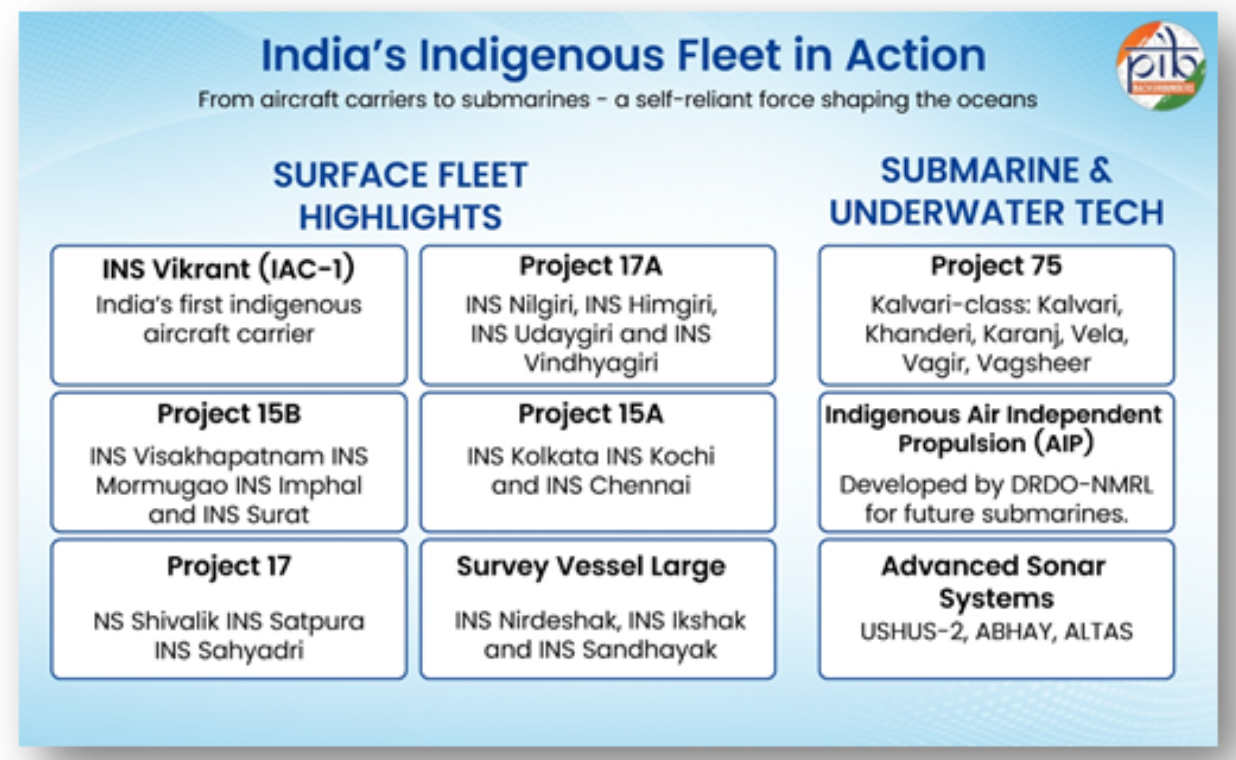
- New-generation destroyers like INS Surat incorporate stealth design and AI-enabled combat systems to enhance survivability and strike power.
- The Project 17A frigates, such as INS Nilgiri, add vital escort and anti-submarine warfare capability.
- Project 75 submarines, including the newly inducted INS Vaghsheer, strengthen underwater deterrence and achieve full production under the long-delayed submarine program.
- The nuclear triad’s sea-leg is progressing with INS Aridhaman nearing commissioning, carrying K-4 SLBMs (Submarine-Launched Ballistic Missile) capable of credible second-strike deterrence.
- Progress in naval aviation continues with the induction plans for Rafale-M fighter jets and ongoing development toward the indigenous Twin Engine Deck Based Fighter.
All these advancements represent incremental progress towards a three-carrier fleet strategy, essential to ensure continuous carrier deployment across India’s maritime theaters and support power projection in the Indo-Pacific.
Regional Security Leadership: MAHASAGAR Vision
The Navy’s role extends well beyond national waters through India’s vision of MAHASAGAR (Mutual and Holistic Advancement for Security and Growth Across Regions). As the Preferred Security Partner in the Indian Ocean, India has significantly expanded maritime cooperation and security assistance.
In 2025, the Navy played a crucial role in safeguarding shipping lanes affected by crises in the Red Sea, ensuring safe passage of merchant vessels and providing emergency assistance during piracy attempts.
These efforts not only protected international maritime commerce but reinforced India’s role in maintaining a stable maritime order. As the world’s trade is increasingly dependent on secure sea routes, such operations underline the Navy’s importance as a vital pillar of national economic security and a responsible net-security provider.
Indigenisation and Maritime Capability: Strategic Imperatives for the Indian Navy
The Indian Navy has transformed from a "Buyer's Navy" to a "Builder's Navy," with over 100 warships domestically designed by the Warship Design Bureau. This shift towards self-reliance is critical for operational autonomy and supply-chain security. Nearly 67% of capital acquisitions in the past decade have involved Indian industries, reducing import dependence and strengthening the defence manufacturing ecosystem. Major indigenous platforms include INS Vikrant with 76% local content, Project 17A stealth frigates, and Kalvari-class submarines.
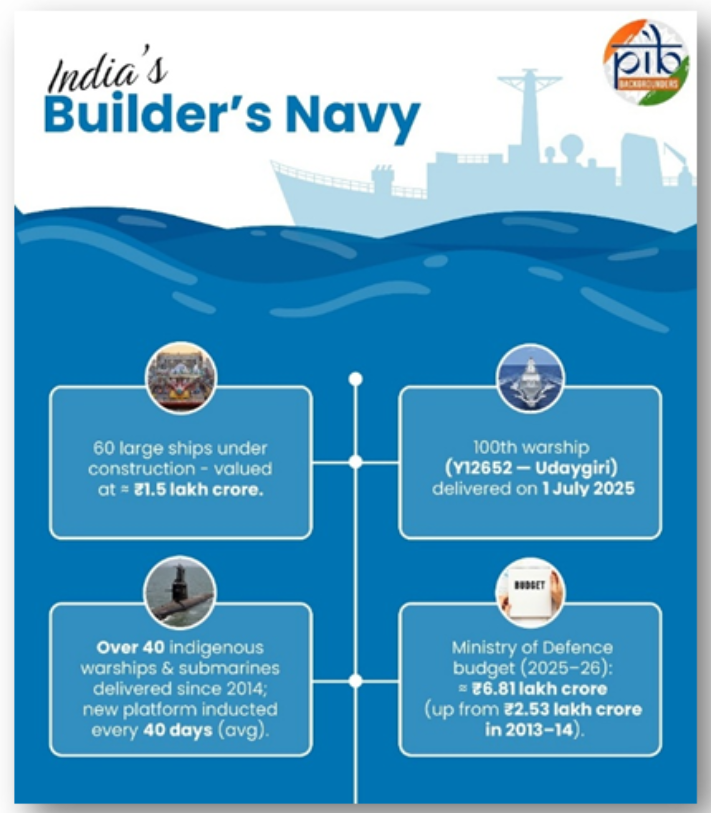
The Navy is pursuing 194 innovation projects through initiatives like NIIO (Naval Innovation and Indigenisation Organisation), SPRINT (Supporting Pole-Vaulting in R&D through Innovations for Defence Excellence), and iDEX (Innovations for Defence Excellence), engaging MSMEs and startups. This comprehensive indigenization effort aims to achieve full self-reliance by 2047 under the Aatmanirbhar Bharat vision, ensuring India's maritime security and strategic resilience.
Strengthening Human Capital: Toward Full Inclusion
Human resource transformation remains central to naval readiness. Decisions like the plan for the induction of women into the submarine arm signify the steps towards complete gender integration across all combat roles in the Indian Navy.
Advanced training in cyber operations, electronic warfare, and unmanned technologies is being expanded as the Navy prepares its personnel for future battlefields dominated by robotics, information warfare, and artificial intelligence. This focus on skill augmentation ensures that the Navy remains technologically competitive and operationally adaptable.
Conclusion
Indian Navy Day 2025 represents a celebration of India’s maritime power, strategic foresight, and national confidence. From the decisive strikes of Operation Trident to contemporary missions like Operation Sindoor, the Indian Navy has shown its capability to secure India’s interests across vast oceanic expanses. The Thiruvananthapuram celebrations highlighted not just naval strength but a civilizational maritime legacy that India seeks to reclaim as a rising global power.
As an Aatmanirbhar, combat-ready force with expanding regional influence, the Indian Navy is shaping a secure maritime future where India’s trade routes, blue economy, and sovereign interests remain protected.
Its growing operational reach, technological modernization, and commitment to inclusivity ensure that the Navy will continue to be a key instrument of national strategy, diplomacy, and disaster response in the Indo-Pacific and beyond. As India deepens its maritime footprint, the Navy stands resolute, guarding the seas today while charting the course for tomorrow.

Master Digital Age Governance & Technology Trends with VisionIAS Comprehensive Current Affairs →
Indian Navy Day FAQs
1. When is Indian Navy Day celebrated?
Ans. December 4 annually.
2. Why is Navy Day celebrated on December 4?
Ans. It commemorates Operation Trident during the 1971 Indo-Pak War.
3. What is the theme of Navy Day 2025?
Ans. "Combat Ready, Cohesive, Credible, and Aatmanirbhar Force."
4. What was Operation Trident?
Ans. A naval strike on Karachi that destroyed Pakistani warships and fuel depots.
5. What does MAHASAGAR stand for?
Ans. Mutual and Holistic Advancement for Security and Growth Across Regions.