Current Affairs
Jallianwala Bagh Massacre: 107 Years of Remembrance, Resistance, and Resolve
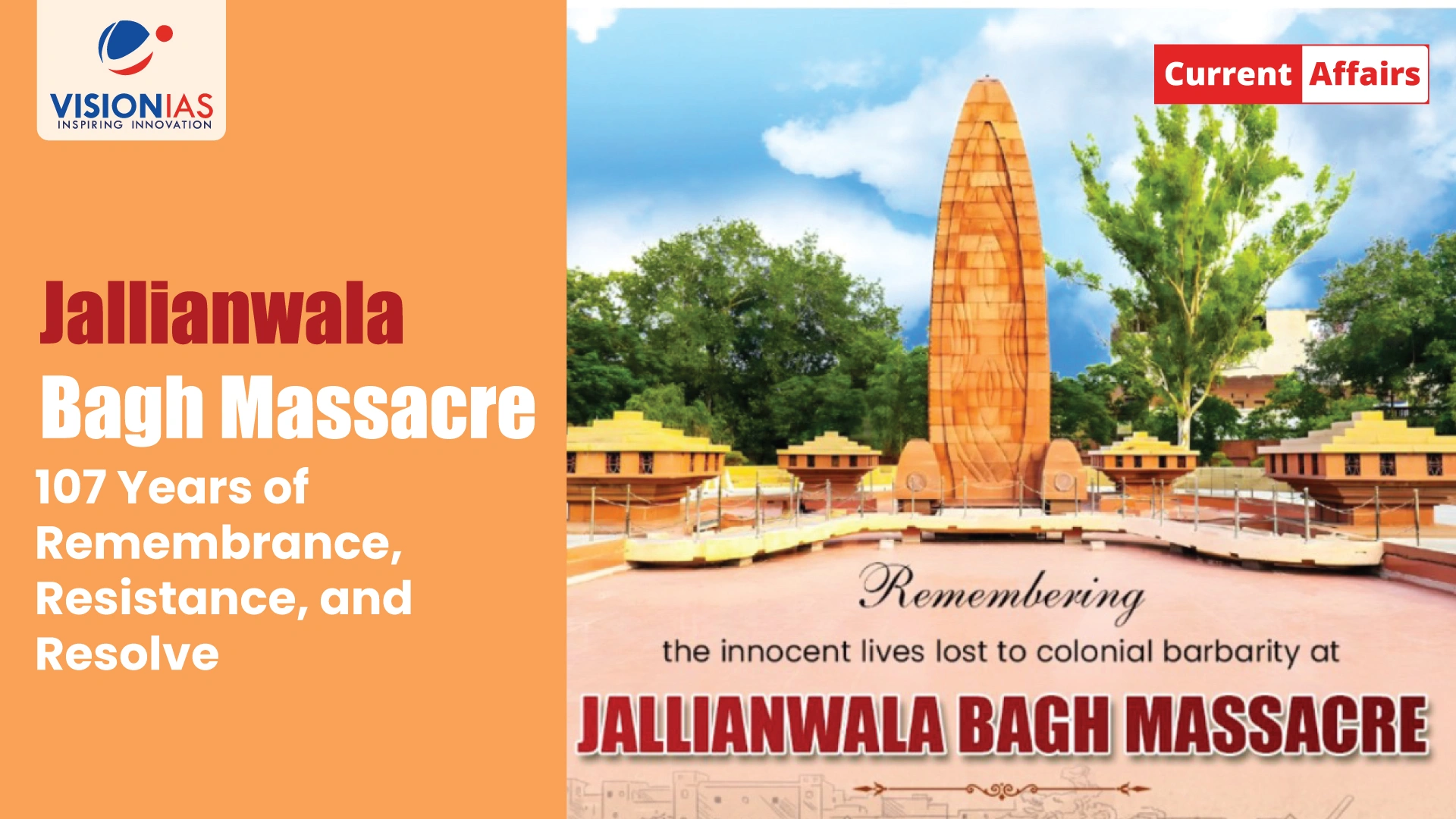


















India pays homage to the valiant souls who were martyred in the Jallianwala Bagh massacre on April 13, 1919.
On April 13, 1919, a crowd had gathered at Jallianwala Bagh in Amritsar, some to celebrate the harvest festival of Baisakhi, others to peacefully protest against the Rowlatt Act. What followed was one of the most significant acts of colonial violence in modern Indian history.
British troops under General Reginald Dyer opened fire on thousands of unarmed civilians without warning. Several were killed. Over a thousand were injured. The only exits were blocked. Many jumped into a well inside the garden to escape the bullets.
107 years later, the Jallianwala Bagh Massacre remains etched into India’s national memory as a symbol of colonial brutality and the spirit of resistance.
Background: What Led to the Jallianwala Bagh Massacre?
The Jallianwala Bagh Massacre did not occur in isolation. It was the result of a series of political, social, and legislative decisions that had been building for years.
The Rowlatt Act of 1919 was the most immediate trigger. Introduced by the British government in March 1919, it gave authorities powers to arrest and detain individuals suspected of sedition without trial, without warrant, and without appeal. It sparked nationwide outrage.
Rowlatt Act: Spark That Ignited Unrest
The Rowlatt Act allowed the provincial government to search any place and arrest any person without a warrant. Detainees could be imprisoned for up to two years without trial.
Mahatma Gandhi organised a Satyagraha on April 6, 1919, in response. By April 8, 1919, Mahatma Gandhi himself was arrested. In Amritsar, tensions escalated further with the arrest of two nationalist leaders, Dr. Saifuddin Kitchlew and Dr. Satya Pal. Their detention triggered protests across the city.
Martial Law and Growing Tensions
General Dyer was tasked with restoring order. On April 13, 1919, he issued orders prohibiting public gatherings and assemblies of more than three people. Even so, a large number of people gathered at Jallianwala Bagh, with many unaware of the ban and others assembling in peaceful protest.
What Happened on April 13, 1919?
An estimated 15,000 to 20,000 people had gathered peacefully, with no weapons among them. The meeting took place in Jallianwala Bagh, a garden near the Golden Temple in Amritsar, which was enclosed on all sides by buildings and had only one narrow entrance. This exit was swiftly blocked by General Dyer’s troops.
Without issuing any warning, General Dyer ordered his soldiers to open fire into the crowd. The firing lasted 10 to 15 minutes. A total of approximately 1,650 rounds were fired. It ceased only when the ammunition ran out.
People rushed for the exit. Many climbed the walls. Many jumped into the well inside the Bagh. General Dyer and Mr. Irving estimated 291 deaths; however, the official British figure, as later determined by the Hunter Commission, settled on 379 deaths and approximately 1,200 wounded. The Indian National Congress inquiry, which conducted more extensive local interviews, estimated over 1,000 deaths, a stark contrast to the official British count.
General Dyer later declared that he had ordered the firing to produce a “moral effect” on the people of India.
Aftermath of Jallianwala Bagh Massacre
The massacre sent shockwaves across India and the world. The reactions it provoked shaped the course of India’s freedom struggle.
Indian National Congress and Mahatma Gandhi’s Response
The Indian National Congress strongly condemned the massacre. Rabindranath Tagore renounced the knighthood conferred on him by the British Crown in protest against the massacre and the failure to deliver justice. “This disproportionate severity of punishment inflicted upon the unfortunate people and method of carrying it out is without parallel in the history of civilized govt.” wrote Rabindra Nath Tagore the noble laureate while returning knighthood.
Mahatma Gandhi’s decision to return the Kaiser-i-Hind medal, along with his Zulu War and Boer War medals in August 1920, symbolised his complete break with British authority and marked the formal launch of the Non-Cooperation Movement. This step was also deeply influenced by the Jallianwala Bagh massacre, which had profoundly shaken his faith in British justice. The continued failure of the colonial government to deliver justice to the victims further strengthened his resolve.
In response to the massacre, the Indian National Congress set up its own inquiry committee, comprising leaders such as Motilal Nehru, C.R. Das, Abbas Tyabji, M.R. Jaykar, and Mahatma Gandhi, highlighting the nationalist leadership’s determination to seek accountability.
British Government’s Response
The British response was divided. Leaders like Winston Churchill and former Prime Minister H.H. Asquith criticised the massacre in the British Parliament. However, Michael O’Dwyer, the Lieutenant Governor of Punjab, expressed support for General Dyer’s actions.
The Hunter Commission, set up on October 14, 1919, condemned General Dyer’s actions but imposed no penal or disciplinary consequences. General Dyer was relieved of duty and barred from further service in India, a conclusion that most Indians viewed as inadequate.
Impact of the Jallianwala Bagh Massacre on India’s Freedom Struggle
The Jallianwala Bagh Massacre was a turning point in India’s independence movement.
It shattered the belief in the fairness of British rule. For decades, many Indians, including moderates, had believed in the progressiveness of colonial governance. The massacre and its aftermath destroyed that belief. The Hunter Commission’s conclusions proved that Indians could not expect justice from British institutions. This realisation accelerated the demand for complete independence, Purna Swaraj.
It intensified nationalist sentiment. The brutality at Jallianwala Bagh gave Mahatma Gandhi the moral foundation to build his mass movement around the deliberate breaking of unjust laws. As people began to defy colonial authority, the legitimacy of British rule weakened.
It unified India. The massacre brought together Indians across regions, religions, and castes in shared grief. The December 1919 Congress session at Amritsar, attended by a large number of people including peasants, reflected this unity.
It also triggered the Gurudwara Reform Movement. The act of the clergy (Mahants) of the Golden Temple honouring General Dyer angered many Sikhs and strengthened calls for reforms in the management of Sikh shrines.
Jallianwala Bagh Today: Memorial and Legacy
In 1961, the Government of India established a memorial at Jallianwala Bagh to honour the spirit of India’s revolutionaries and all those who lost their lives on that day.
The walls still carry the marks of bullets. The well, into which dozens jumped to escape, remains. Every year, on April 13, the nation pauses to remember.
Conclusion
Over a century after the Jallianwala Bagh Massacre, the lessons of April 13, 1919 remain relevant. The courage of those who gathered at Amritsar, and the sacrifice of those who never left, continues to inspire India’s commitment to justice, freedom, and human dignity.
Master Digital Age Governance & Technology Trends with VisionIAS Comprehensive Current Affairs →
Jallianwala Bagh Massacre FAQs
1. When did the Jallianwala Bagh Massacre take place?
Ans. April 13, 1919.
2. Who ordered the firing at Jallianwala Bagh?
Ans. General Reginald Dyer.
3. What law triggered the protests that led to the Jallianwala Bagh Massacre?
Ans. The Rowlatt Act of 1919.
4. What commission was set up to investigate the Jallianwala Bagh Massacre?
Ans. The Hunter Commission, established on October 14, 1919.
5. When was the Jallianwala Bagh memorial established by the Government of India?
Ans. 1951.